
Shear Walls vs. Load Bearing Walls
When constructing a building, ensuring its stability and resilience is critical. Two essential components that play crucial roles in building stability are shear walls and load bearing walls.

Exterior Wall Thickness: How Thick Should Your Walls Be?
The exterior wall thickness of a home significantly impacts the house’s energy efficiency, disaster resistance, and IEQ. Learn how thick exterior walls should be.

How to Design Flood Resistant Basement Walls

Effective Strategies to Insulate Block Walls
Improving the insulation of block walls significantly enhances energy efficiency, comfort, and durability in both residential and commercial spaces. Block walls, often made of concrete masonry units (CMUs), are sturdy but notoriously poor at retaining heat without proper insulation.

What is the Optimal Foundation Wall Thickness?
A concrete foundation wall’s thickness plays an integral role in its long-term strength and durability. Local building codes mandate the foundation specifications, addressing conditions that affect the foundation thickness.

Party Wall Construction: Why ICFs Are the Best Option
Party wall construction plays a crucial role in the development of townhouses, condominiums, and duplexes. Party walls are strategically placed to separate individual units within a shared structure, to provide privacy, fire protection, and structural stability.

Benefits of Using ICF for Tilt-Up Wall Construction

Innovations in Exterior Wall Construction: What You Need to Know
For generations, the construction of exterior walls has followed traditional practices that have primarily involved wood or steel framing. These methods have been the backbone of residential and light commercial construction, by providing shelter, stability, and a certain level of insulation.

Are Poured Basement Walls Better than CMUs for Below-Grade Construction?
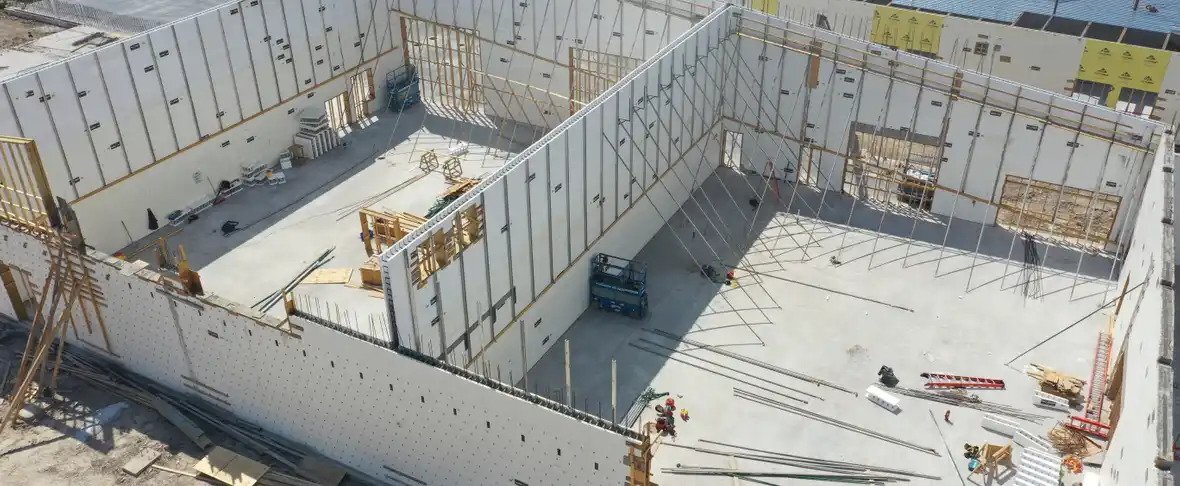
The Backbone of Modern Construction: Steel Reinforced Concrete Walls