Build to Resist Tornadoes: Storm Safe ICF Structures
Research by Texas Tech Wind Science and Engineering Research Center has demonstrated that ICF walls better protect occupants of houses from windblown debris, than frame walls. Being hit by windblown debris is the most common cause of injury during tornadoes.

How to Build a House Foundation: 7 Steps to get a Solid Foundation
What if my contractor doesn’t know how to build with it?
Fox Blocks offers the most comprehensive installer training in the industry. We can train your contractor or help you locate a trained installer in your area.

Building a Year-Round, Energy-Efficient and Durable Cabin with Fox Blocks ICF
Cabins and cottages often start as a second home or weekend retreat. ICF construction ensures year-round use of the cabin.

What Climates Does ICF Work Best In?
What Is An Energy Audit?
The term “energy audit” can seem daunting. But in reality, it’s nothing to be afraid of, and in fact, is designed to be beneficial to you.
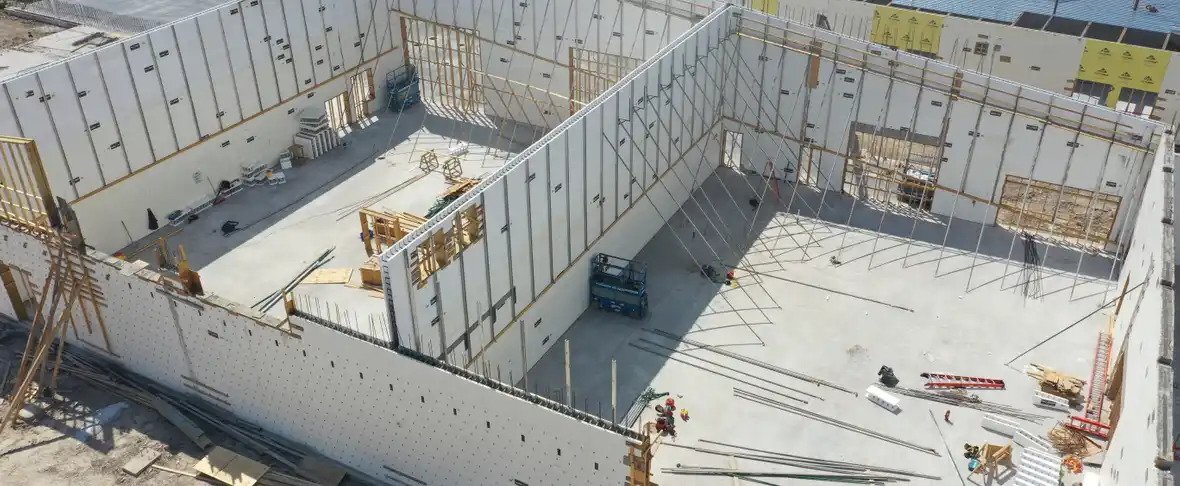
The Integrated Design Process (IDP) and Insulated Concrete Forms (ICFs)

Benefits of Building an Energy-Efficient Home in Florida

6 Tips for Designing a Minimalist House Exterior
Minimalist architecture materials and design always aim for functionality. Fox Blocks presents six suggestions on materials for designing a minimalist house exterior.
Why is the concrete limited to a placement height or lifts of 4 feet (1.2 m)?
To alleviate the pressure from the liquid concrete, the concrete is placed in layers or ‘lifts’. The first lift is limited to 4′ (1.2 m) of concrete around the perimeter of the building. This allows approximately one hour for the concrete to set-up before continuing with the next 4′ (1.2 m) lift. The lower lift provides support for the next lift as the concrete is placed continuously around the building in consecutive lifts to the top of the wall.