
Why Some Rooms Are Always Too Hot or Too Cold: Causes and Fixes
One room should not feel like a different season from the rest of the house. When a bedroom runs hot, an office stays cold, or an upstairs room never settles down, one thermostat setting can leave people adjusting blankets, vents, fans, and room-by-room workarounds just to get through the day. The real answer to why some rooms are always too hot or too cold often starts inside the wall system, long before anyone adjusts a vent or calls an HVAC technician.
Why HVAC Advice Does Not Fully Answer The Problem
The first round of troubleshooting has a place, but it should not become the whole explanation.
The Usual Advice Only Goes So Far
Some rooms stay too hot or too cold because they gain or lose heat faster than the rest of the home. HVAC issues can contribute, but the deeper cause is often the building envelope: thermal bridging, air leakage, inconsistent insulation, and wall assemblies that cannot slow temperature swings consistently.
By the time most homeowners search for an answer, they have already heard the first round of advice: check the filter, open the vents, close the blinds, and ask whether the ducts need balancing. Those steps sometimes help, but they do not explain why one room keeps drifting out of range faster than the rest of the home.
The Room Is Still Gaining Or Losing Heat
A room usually drifts out of range because something is driving the heat gain or heat loss. It may sit over a garage, face long hours of afternoon sun, have more exterior wall area, or lose conditioned air through gaps around framing and penetrations. It may also be surrounded by a wall assembly that lets heat move through studs, plates, headers, and other framing members faster than the insulated cavities around them.
Once that starts happening, the HVAC system is forced to chase a condition the structure keeps recreating. That advice may improve airflow, but it does not explain why the same room keeps demanding extra conditioning. Duct balancing redistributes conditioned air; it does not change the way heat moves through a wall. A larger HVAC system can deliver more conditioned air, but oversizing equipment can create other comfort and humidity problems.
Why Some Rooms Are Always Too Hot Or Too Cold Starts With The Envelope
The more useful question is, “Why does this room gain heat faster than the rest of the house?” Then the problem becomes a building-envelope question, not only a mechanical one. The building envelope is the barrier between outdoor conditions and indoor comfort. It includes the walls, roof, windows, doors, insulation, air sealing, and other assemblies that control heat, air, and moisture movement.
If that envelope is inconsistent, room temperatures become inconsistent too. One side of the home may hold conditioned air well, and another may let outdoor heat or cold push through faster than the HVAC system can offset. That difference is why comfort problems often show up room by room instead of across the whole house at once.
How Thermal Bridging And Air Leakage Create Uneven Room Temperatures
Thermal weak points and air movement usually explain why one room reacts faster to outdoor conditions than another.
Thermal Bridging Lets Heat Bypass The Insulation Layer
In conventional framed construction, insulation is usually placed between wood or steel framing members. That leaves repeated paths where heat can bypass the insulation layer. This is thermal bridging in homes, and it matters because framing conducts heat differently than the insulated cavity beside it.
A room does not feel the rating printed on one insulation product; it feels how the full wall assembly performs after framing, insulation R-value, air sealing, and exterior exposure work together.
Air Leakage Adds Uncontrolled Movement
Air leakage adds another problem. Small gaps, seams, joints, and penetrations can let outside air enter and conditioned air escape. The homeowner may experience that as a draft, a stubborn cold wall, an overheated room, or a space that never quite matches the thermostat setting.
In practical terms, uneven temperatures in home interiors often come from a combination of heat transfer through the wall assembly and air movement through weak points in the enclosure. The next issue is how quickly the wall reacts when outdoor temperatures rise or fall. That rate of change matters when explaining why some rooms are always too hot or too cold, because thermal mass affects how quickly the wall responds.
What ICF Thermal Mass Does For Room Comfort
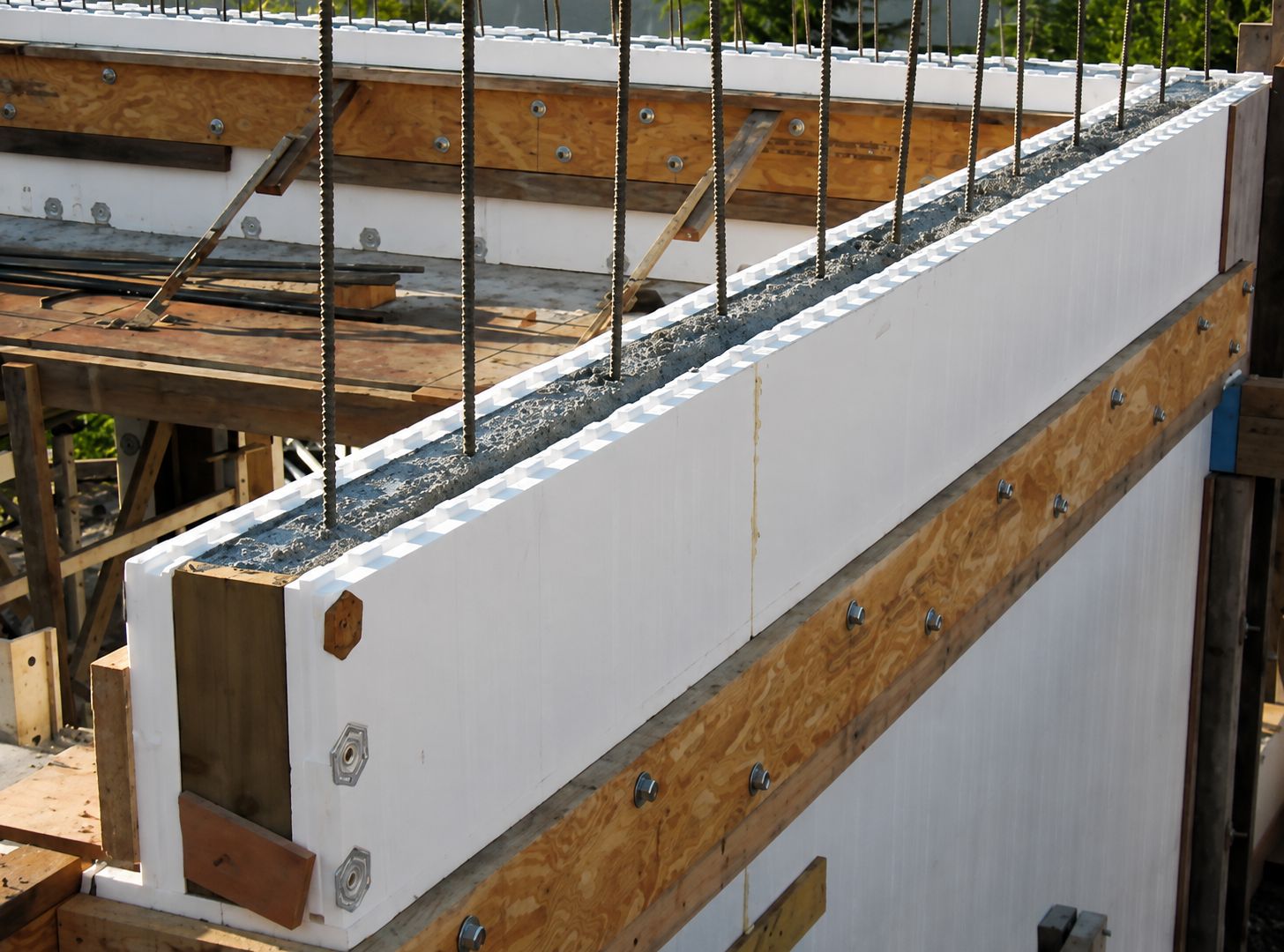
ICF thermal mass works differently because insulated concrete forms combine rigid insulation with a concrete core.
The insulation helps reduce heat transfer through the wall, and the concrete mass helps slow the rate at which temperature changes move through the assembly.
Lightweight framed walls do not provide the same mass-based moderation as a concrete wall core.
Wood framing can hold insulation between cavities, but the framing itself does not add the dense, continuous mass needed to slow temperature movement through the whole wall in the same way.
That does not mean a home no longer needs a properly designed HVAC system. It means the wall system can reduce the speed and severity of comfort swings before the HVAC system has to respond. This is where post-build work has limits. It may improve airflow or patch certain weak spots, but it rarely gives the finished home the same wall performance that could have been built in from the start.
How ICF Construction Builds Temperature Stability From The Start
ICF construction changes the wall before the comfort problem becomes a retrofit issue.
Build Wall Performance Into The Assembly
ICF construction is one way to build that wall performance into the home from the start. Its continuous insulation surrounds the concrete core instead of stopping between studs, reducing the repeated framing paths that move heat around conventional cavity insulation. The concrete adds mass to the assembly, and a properly detailed ICF wall can also reduce unwanted air movement compared with leakier construction methods.
Together, those traits support a more consistent home temperature before comfort depends entirely on registers, sensors, and thermostat adjustments.
Choose The Wall System Before Finishes Lock In
Major envelope decisions are easiest to make before the house is finished. Before drywall, siding, trim, and mechanical finishes lock in the assembly, builders still have room to design for better temperature stability. Wall-system decisions can reduce thermal bridging, increase insulation continuity, improve air control, and add useful thermal mass from the start, avoiding later comfort fixes that involve opening finished surfaces, adding supplemental equipment, or trying to correct one room at a time.
That early envelope decision is central to why some rooms are always too hot or too cold. A finished home leaves people working around the problem. A planned home gives them a chance to reduce the problem before it becomes part of daily life. If the goal is to solve uneven room temperatures beyond vent adjustments and seasonal service calls, the wall assembly deserves attention before the mechanical plan is finalized.
Why The Build Phase Is The Best Time To Solve Hot And Cold Rooms
A stronger comfort strategy starts by asking what each room has to resist before conditioned air ever reaches it. HVAC still matters, but it works best when the enclosure gives it a stable indoor environment to condition. The wall assembly should help hold the line instead of forcing the equipment to fight the same temperature swing every day.
For homeowners wondering why some rooms are always too hot or too cold, the most useful answer may arrive before the home is built. The comfort problem that feels like a thermostat issue in year two may have started as a wall decision made before move-in. ICF construction gives builders a way to address heat transfer, thermal bridging, insulation continuity, and thermal mass as part of the structure rather than treating those issues as future troubleshooting items.
Plan A More Stable Wall System With Fox Blocks
In new construction, the wall system should be part of the comfort plan before framing, insulation, and mechanical details are locked. Fox Blocks helps homeowners and builders evaluate ICF construction with the Project Estimator, which organizes early planning around materials, labor, concrete, rebar, pricing, and project summaries. Contact us today for more information.
Frequently Asked Questions About Hot And Cold Rooms In A Home
Why Does One Room Keep Falling Out Of The Thermostat Range?
A room can keep drifting out of range when sun exposure, exterior wall area, air leakage, thermal bridging, or inconsistent insulation makes it gain or lose heat faster than nearby rooms.
Do HVAC Fixes Solve Uneven Room Temperatures?
HVAC fixes can improve airflow, but they do not always correct the wall, insulation, or air-sealing conditions that make one room harder to keep comfortable.
How Does Thermal Bridging Affect Room Comfort?
Thermal bridging lets heat move through framing members around the insulation layer, which can make a room gain or lose heat faster than the thermostat setting suggests.
Can ICF Construction Help Create More Stable Indoor Temperatures?
ICF construction can help support more stable indoor temperatures because continuous insulation and concrete mass slow heat movement through the wall assembly.
When Is The Best Time To Fix Hot And Cold Rooms?
The best time to address the root causes is during design and construction, before drywall, siding, and mechanical finishes make the wall system harder to change.