
From Efficiency to Durability: The Many Benefits of ICF Construction
When planning a new construction project, you’ve probably come across ICF blocks as a potential building material. Many people are unfamiliar with ICF (Insulated Concrete Forms) and its multitude of benefits. ICF blocks result in buildings that are incredibly strong, energy-efficient, and easy to maintain for decades to come.
What Are ICF Blocks?

ICF blocks consist of two 16" x 48" panels of foam insulation, held together with ties that form a hollow space between the sheets. The blocks connect together and are stacked on top of each other on a job site to form a wall. Once the blocks are in place, horizontal and vertical rebar is placed in the hollow space between the two insulation panels and concrete is poured over the rebar. Once the concrete sets, the result is a steel-reinforced concrete wall with inner and outer layers of continuous insulation built in.
The Benefits of ICF Construction
Insulated concrete forms (ICFs) combine structure, insulation, durability, and comfort in a single wall assembly. The benefits of ICF construction include energy performance, durability, fire resistance, moisture resistance, disaster resilience, easier assembly, and quieter interiors. Here are some of the most notable benefits:
Exceptional Insulation
Insulated concrete forms (ICFs) are a strong way to improve thermal performance in a home. Concrete has a great deal of thermal mass that acts as a thermal battery, meaning it reduces the effects of outdoor temperature fluctuations on the interior environment. The two layers of continuous expanded polystyrene (EPS), one interior and one exterior, work together with the concrete thermal mass to reduce the size of the heating and cooling equipment required for the building.
ICFs provide a high-performance building envelope with continuous insulation, reduced air leakage, and long-term thermal stability. Homeowners comparing ICF vs. batt insulation should consider that ICF places insulation on both sides of a reinforced concrete core instead of relying on insulation placed between wood framing members.
Design Possibilities

ICFs can be used to create curved walls or other shapes that may be easier to build than with traditional construction methods. The ease of working with ICF blocks also helps crews form curves and custom shapes with fewer framing complications.
Acoustic Performance
ICF noise reduction is one of the most practical but often overlooked benefits of ICF construction. The reinforced concrete core adds mass, and the continuous insulation on both sides helps reduce airborne sound transmission through the wall assembly. That combination creates a quieter indoor environment than many conventional wall systems can provide.
Sound Transmission Class, or STC, is a rating that helps explain how well a wall assembly limits airborne sound. A higher STC rating means better sound-blocking performance. The difference becomes clearer when typical ICF wall assemblies are compared with conventional framed walls.
| Wall Assembly | Approximate STC Range | What It Means For Homeowners |
|---|---|---|
| Fox Blocks ICF wall assembly | STC 45–50+ | Strong airborne sound reduction through the exterior wall assembly |
| Typical ICF wall assemblies in common comparisons | STC 50–55 | Substantially quieter than many conventional framed wall assemblies |
| Insulated wood-frame wall | Around STC 38 | More outside noise can pass through the wall assembly |
In practical terms, ICF walls can allow only about one-quarter to one-eighth as much sound to penetrate compared with wood-frame walls. That can make a noticeable difference for homes exposed to traffic noise, construction activity, rail corridors, airport flight paths, and expanding commercial development.
Sound control is becoming more important as communities grow around data centers and the infrastructure that supports them. New development can bring jobs, investment, and housing demand, but it can also add traffic, backup generators, cooling equipment, temporary jobsite noise, and commercial activity. ICF gives builders and homeowners a way to add housing near growth corridors with energy efficiency, resilience, sound control, and indoor comfort built into the wall system.
The difference shows up in daily routines. A quieter home makes remote work, online learning, sleep, family time, and indoor-outdoor privacy easier to protect. ICF walls help reduce outside noise entering the home, and they also help limit sound leaving the home, which can matter in dense neighborhoods and multi-story residential buildings.
This kind of wall-level sound control is best planned during new construction. Interior finishes, landscaping, windows, and mechanical upgrades can help with noise after the fact, but they cannot easily duplicate the built-in acoustic performance of an ICF wall system. That same assembly used in high-performance building applications also helps residential projects manage sound and comfort.
For projects where peace and quiet matter, this is one of the benefits of ICF construction that should be considered during the wall-system decision, not after the walls close in.
Fire Resistance
Concrete is naturally fire-resistant, which makes it a strong choice for exterior wall assemblies. Concrete also slows down the spread of fire with its exceptional thermal resistance. Walls built from ICF blocks withstand fires for longer than traditional construction methods and are an important component of exceptional fire-resistant construction.
Water Resistance
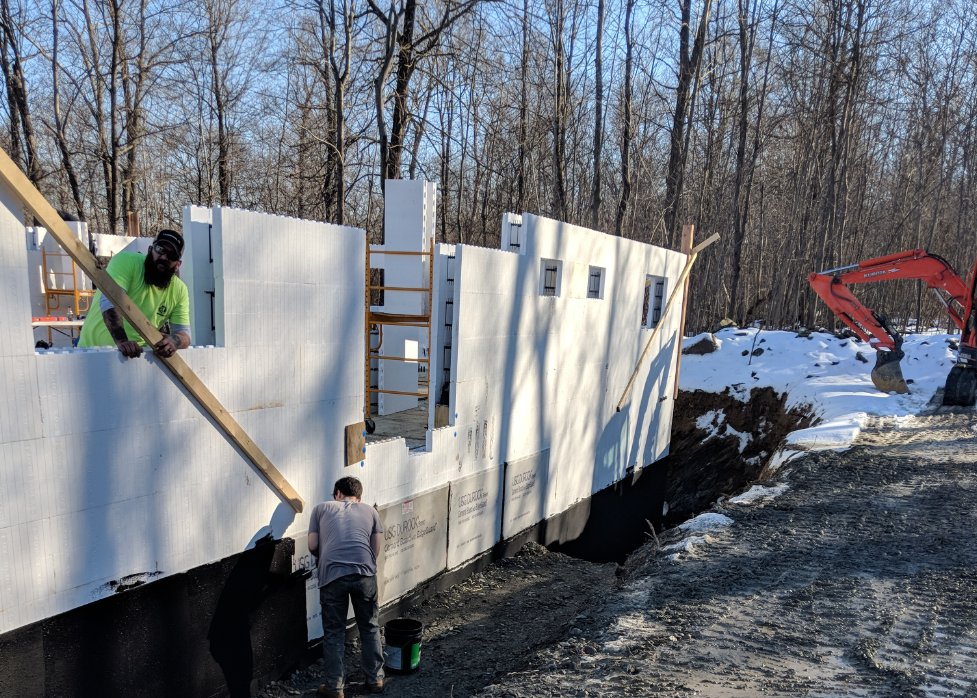
Insulated concrete forms are also resistant to water and moisture damage. When a waterproof membrane is applied to below grade walls, ICF blocks can even be used as waterproof foundation walls. Unlike above-grade wood wall components that can rot or deteriorate after moisture exposure, properly detailed EPS insulation and concrete do not provide the same organic material for decay.
Disaster-Resistant
Insulated concrete forms also strengthen a home’s disaster-resilience profile. Concrete is a high-strength building material, and homes properly designed and built with ICFs can be more resilient during natural disasters such as hurricanes, earthquakes, and floods than homes constructed with many conventional materials. The steel-reinforced concrete nature of ICF blocks even makes them a great candidate for use in storm shelters. If you live in an area that is prone to natural disasters, insulated concrete forms may be a strong construction option since ICF wall assemblies meet FEMA and ICC 500 resiliency standards for high winds).
Ease of Use
Insulated concrete forms also simplify wall assembly for trained crews. Unlike some traditional construction methods, ICF wall construction does not require separate framing, exterior sheathing, cavity insulation, and some air-barrier steps to create the wall assembly. ICF blocks are also lightweight, reversible and easy to move around a job site. The attributes of an ICF wall assembly (one standard block provides 5.33 sq.f.t of wall area) allow for faster close-in timelines, enabling faster completion and occupancy while helping builders manage construction labor costs.
ICF Blocks: A Better Building Material
With many options on the market for building materials, deciding which one to choose can be difficult. Wood frame construction, structural insulated panels, concrete masonry units, and tilt-up construction all have their pros and cons, but none bring the same mix of features as ICF block construction.
ICF blocks bring ease of use, exceptional strength, and long-lasting durability into one wall system. Among the most important ICF home benefits are insulation, structural strength, moisture resistance, acoustic control, and long-term durability. These insulated concrete forms advantages are especially valuable because they are difficult to recreate with add-on upgrades later.
The benefits of ICF construction become clearer when homeowners and builders look beyond first cost and consider how the home will perform for decades. Energy efficiency, quieter interiors, fire resistance, water resistance, and disaster resilience all contribute to a home that feels better to live in and is easier to maintain. ICF should be at the top of the list for any new building project that needs comfort, strength, and long-term value.
For support with your next ICF project, contact the experts at Fox Blocks today.