What is the typical Interior finish on an ICF?
All building codes in the USA and Canada specify that plastic insulation (EPS) must be covered by a thermal barrier equivalent to 15 minutes of fire protection in habitable spaces. This is achieved with ½” gypsum board or an equivalent material. Fox Blocks has specific fire testing that proves regular ½” gypsum board with regular drywall screws fastened into the plastic webs remains on the wall for the required 15-minute time period.
Remove Costs on your ICF Project
Two proven areas to remove costs are corners and truss wire.

Cinder Block (CMU) vs. Traditional Poured Concrete Wall Foundations
We cover the differences between CMU blocks and poured concrete foundations so that you don’t have to learn from trial and error.
Project Estimator

Building Stronger Hotels with ICF Blocks

STUDENT–BUILT HOME
This build gave 30 high school students hands-on experience building a home with Fox Blocks ICF from the ground up.

Let’s Talk About Our Foundation
Fox Blocks has been making insulated concrete forms since 2005. Our parent company, Airlite Plastics, was founded in 1946, and today, it is still a family owned business. Airlite produces plastic containers and insulated packaging products for a variety of industries, so we share knowledge of plastics innovation throughout the company.
Are there different types of Expanded Polystyrene (EPS)?
EPS is listed basically under four property classifications – Type I, II, III and IV. The characteristics are based on the density of the molded foam which defines the product type. Fox Blocks ICFs are manufactured as a Type II EPS with a density of approximately 1.5 pounds per cubic foot.
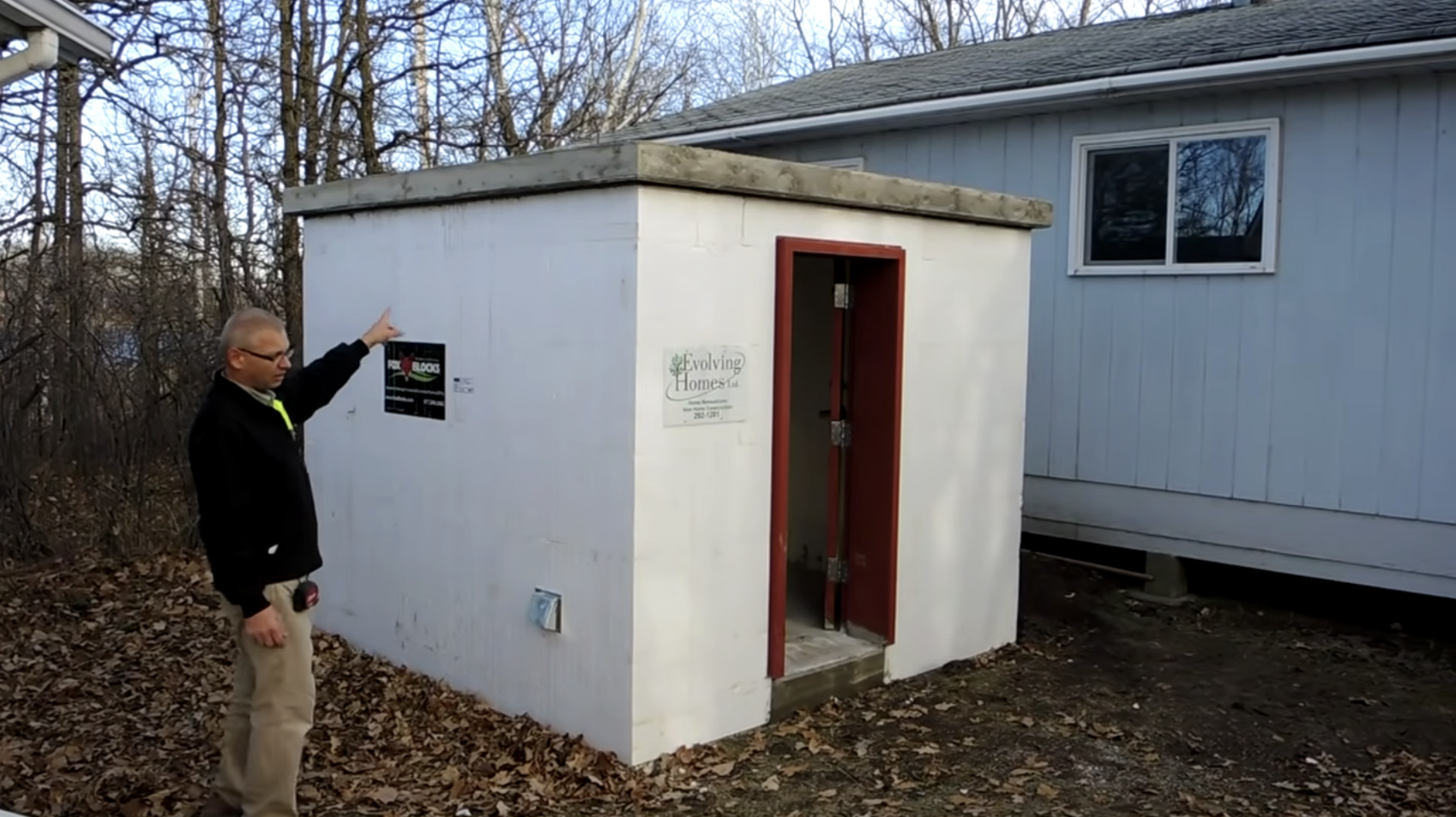
Understanding ICC 500 Storm Shelter Requirements and the Best Materials to Utilize

Fox Blocks Wins Big at the 2020 ICF Builder Awards