
What Is a Stem Wall Foundation? Everything You Need to Know Before You Build
On most plans, the foundation looks like a few simple lines. On a sloped or flood-prone lot, that often means a stem wall foundation instead of a simple slab. Understanding how this type of foundation carries load, and where it makes sense, gives you real leverage when you review designs and estimates instead of guessing at the notes on the page.
How A Stem Wall Foundation Works In Residential Construction
At its simplest, a stem wall is one style of foundation wall: the vertical section that sits on top of the footing and supports the weight of the structure above. The footing spreads loads into the soil, while the wall rises from that footing up to the floor system, sill plates, or slab. Instead of the house bearing directly on a concrete slab at grade, the building bears on this short perimeter wall, which lifts the structure above ground level and creates room for a crawlspace or for deeper floor assemblies.
When A Raised Foundation Is The Right Choice For Your Site
A stem wall foundation earns its keep when the site is working against you rather than cooperating.
On a sloped lot, a short perimeter wall bridges between high and low points so the floor stays level while the footing follows the contour of the ground.
In flood-prone areas or where drainage is poor, lifting the structure above expected water levels protects floor framing, mechanical systems, and finishes from surface water and splashback.
In cold climates with significant frost depth, placing a reinforced wall above a footing set below the frost line helps the structure resist heaving and seasonal movement, while keeping framing safely above the snow and ice zone.
The same logic applies on sites with expansive soils, shallow bedrock, or variable fill, where the priority is controlling movement at the perimeter instead of fighting it later with repairs.
On sites like these and on crawlspace builds that need serviceable underfloor access, the real question is which foundation layout will keep the structure safe and sound year after year, not just which option is cheapest on day one.
Basic Construction Steps From Footing To Floor
For most homes, it helps to think of a stem wall foundation as three connected pieces: the footing, the wall, and the floor system above.
Layout, Excavation, And Footings
In most residential construction, the process starts with layout and excavation for continuous footings around the perimeter and sometimes under interior load lines. The crew digs down to the required depth based on frost line, soil conditions, and code, then forms and reinforces the footing with steel. Vertical reinforcing dowels are inserted into the footing to address lateral pressure at the base of the foundation wall, including pressure from backfill and surrounding soil.
Building The Wall And Connecting The Floor System
Once that footing is ready, crews build the vertical wall segment, whether that is poured concrete, concrete masonry units, or an insulated concrete form system filled with reinforced concrete. They install vertical and horizontal reinforcement to match engineering and code requirements, set anchor bolts for the sill plates, and shape the interior grade so water cannot sit against the wall or footing. Depending on the design, either a slab or floor joists bear on top of the wall, with the crawlspace left open for drainage paths, utilities, and insulation below.
Moisture Control, Drainage, And Backfill
Because this type of foundation creates a vertical separation between the ground and the occupied space, moisture control becomes a core design task. Clean stone or gravel backfill against the outside face relieves hydrostatic pressure and directs water toward footing drains. Inside the crawlspace, a vapor retarder over the soil and planned ventilation or conditioning keep humidity predictable instead of cycling with the weather.
The footing must be wide and thick enough to spread loads without excessive settlement. Drain lines, gravel beds, and surface grading limit how often the base of the wall sees standing water so the concrete, reinforcement, and adjacent framing keep their strength over time.
Materials And Insulation Choices For Stem Wall Foundations
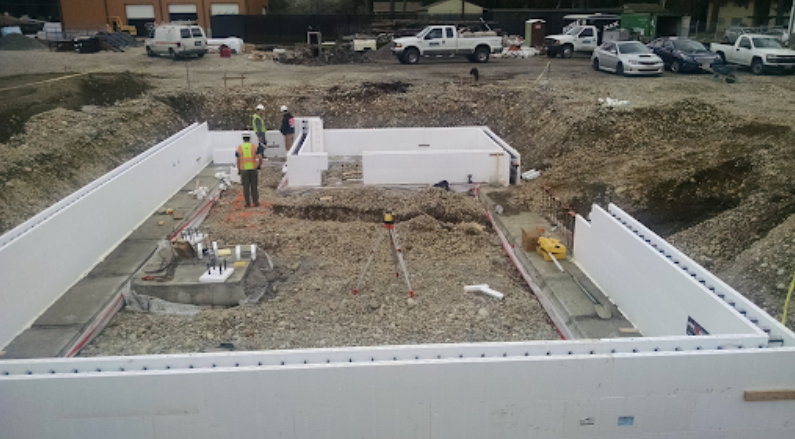
Material choices affect how the system behaves thermally as well as structurally.
A conventional concrete stem wall or masonry wall has significant strength and durability, but it can act as a thermal bridge between exterior conditions and the interior floor perimeter if it is left uninsulated.
Some designs add rigid insulation to one side of the wall, while others use insulated rim boards or floor insulation to control heat loss at the edge.
Using insulated concrete forms for this portion of the foundation combines a structural concrete core with continuous foam insulation on both faces, reducing temperature swings at the floor and helping finished spaces feel more consistent through seasonal changes.
Dimensions And Cost Factors For Stem Wall Foundations
Dimensions and budget work together to determine how this foundation fits a specific project.
Typical Stem Wall Dimensions
Typical dimensions vary by region and engineering, but some patterns show up consistently. Footing widths often fall between one and two feet, with thickness sized for the loads and local code. The wall might rise a foot or two above grade for a low crawlspace, or several feet on the downhill side of a house built into a slope.
Cost Factors Compared To Slab Foundations
Cost comparisons with simple slab foundations have to weigh first price against long-term behavior.
A stem wall usually requires more excavation, more forming, more concrete, and more labor than a slab-on-grade over a compacted base, and drainage, coatings, and insulation add to upfront expense.
Site prep, local building code requirements, and labor rates also influence how wide the cost gap is between these foundations.
In return, the foundation can handle complex grades, move the structure above flood risks, and protect mechanical systems in a crawlspace, which can reduce repair costs and disruption later.
For owners planning heavy insulation, high-performance enclosures, or conditioned lower levels, that flexibility often lines up better with the overall performance goals of the house.
How This Foundation Performs In Daily Use
A slab-on-grade offers a direct connection between finished flooring and the ground, which can feel solid but also tends to mirror ground temperatures unless under-slab insulation is detailed carefully.
A properly detailed stem wall foundation can keep floor framing and living spaces higher, with more room for insulation and air sealing at the perimeter.
Utility lines can be routed through a crawlspace with better access for future changes, instead of being buried in or under a slab where any modification requires cutting concrete.
Poured concrete and cmu stem walls must be detailed with insulation at the floor connection to eliminate thermal bridging at the floor line.
Anyone who has ever cut into a finished slab remembers the mess and disruption.
Integrating ICF Foundations And Walls
On projects that use insulated concrete forms for the above-grade walls, extending that system into the foundation creates a continuous insulated shell from footing to roofline and ties the concrete core together. Using the same forms for the lower foundation segments simplifies layout and reinforcement placement. Once concrete is placed, the forms stay in place as permanent insulation, working alongside drainage and waterproofing on the exterior.
How To Decide If This Foundation Fits Your Project
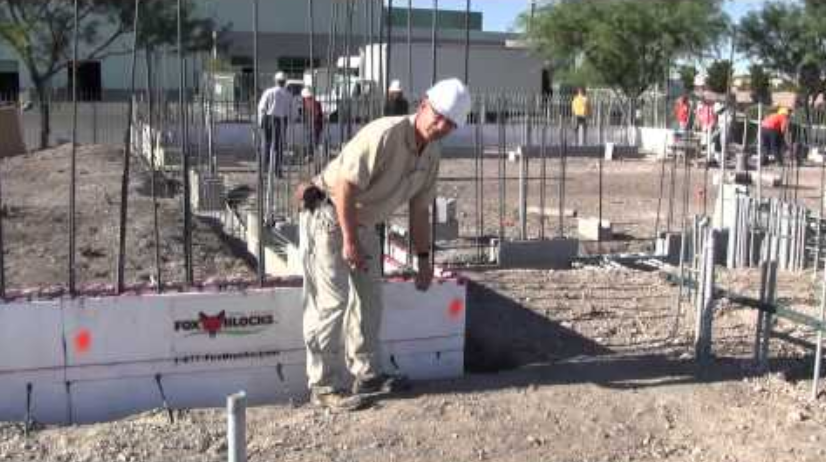
Deciding whether this approach belongs on a project starts with the site and the owner’s priorities.
On sites with significant elevation changes, drainage challenges, or unstable soils, a perimeter wall and crawlspace add more value.
For many residential builds, the right foundation is the one that keeps movement, moisture, and temperatures at the base of the walls predictable.
Depending on local codes and building design an ICF stem wall may be designed with a 6" concrete core as opposed to size requirements for poured concrete and CMU.
A carefully designed stem wall gives engineers and builders that control, and when it is paired with thoughtful drainage, robust reinforcement, and high-performance wall assemblies, it sets up a home that feels solid and stays comfortable for the long term.
Build Durable Raised Foundations With Fox Blocks ICF
Fox Blocks insulated concrete forms help create raised foundations and walls that combine structural strength, continuous insulation, and consistent moisture management on challenging sites. Using the same ICF system from footing level through the above-grade walls simplifies layout and detailing while supporting long-term comfort in every room. Contact us today for more information.