
Why ICF Schools Are Setting the New Standard for Student Safety
School design has entered a new era. Safety now extends beyond code minimums and evacuation plans to the very walls that protect students and staff. As communities face stronger storms, higher energy costs, and growing security concerns, insulated concrete form (ICF) schools are emerging as the new benchmark for building safety, resilience, and long-term performance.
Changing the Definition of School Safety
The conversation around safe schools once centered on emergency response. Today, it begins with how buildings perform under stress. From hurricanes to active threats, the physical structure determines whether a school can withstand impact and remain functional after an event.
Many existing schools were built decades ago using masonry or steel-framed walls that meet structural codes but lack the mass and thermal stability of reinforced concrete. ICF construction changes that foundation entirely.
Each wall integrates a solid, steel-reinforced concrete core between continuous insulation panels.
The result is a monolithic structure that resists wind, debris impact, and fire while maintaining a consistent thermal envelope.
In an era where resilience defines safety, ICF assemblies meet demands traditional wall systems can’t.
How ICF Construction Meets Modern Safety Demands
Safety in schools is never a single feature, it’s the result of the entire system working together. ICF walls combine structural strength, fire resistance, and durability in one continuous assembly. Reinforced concrete cores deliver tested resistance to high wind loads and flying debris, qualifying for safe-room applications under FEMA P-361 and ICC 500.
Unlike hollow masonry, an ICF wall performs as one reinforced mass under both compression and lateral forces. The same structure that keeps debris out also keeps energy in. When temperatures swing or power interruptions occur, the concrete’s thermal mass stabilizes interior conditions, protecting students and staff from heat or cold extremes. Fire ratings up to four hours per ASTM E119 further extend that envelope of protection. Resilient buildings safeguard occupants even when every external system fails.
Designing Safe Rooms Within Everyday Spaces
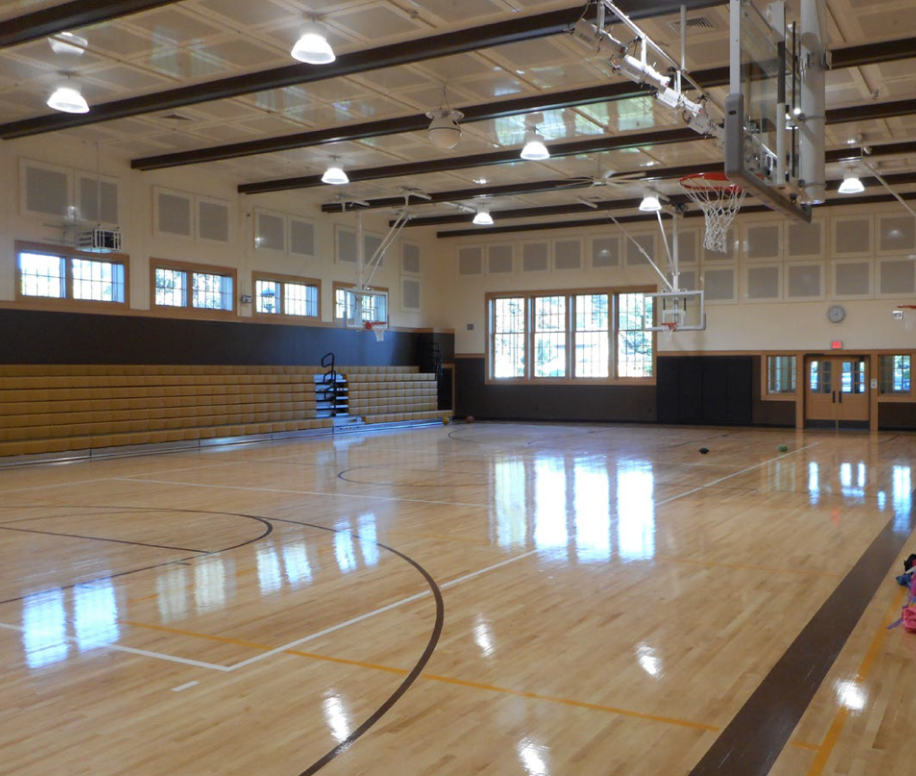
ICF design makes protection part of everyday architecture. Architects can embed safety into classrooms, gyms, and cafeterias instead of isolating it in dedicated shelters. Because ICF assemblies can be detailed to meet FEMA P-361 and ICC 500 storm-shelter standards, many new schools designate large common spaces as community refuge zones.
These rooms look and function like normal learning areas but are engineered to withstand hurricane-force winds and debris impact. That dual-use design eliminates the need for separate hardened structures and ensures every student, teacher, and staff member remains protected, without ever leaving the building.
Beyond Safety: Energy and Acoustic Performance
Protection and performance go hand in hand. Energy-efficient walls keep schools operational and budgets stable. ICF assemblies achieve high R-values and exceptional air tightness, aligning with IECC and ASHRAE 90.1 energy standards. Reduced HVAC loads translate to fewer system failures and predictable operating costs year after year.
Noise control is another performance layer often overlooked in safety discussions. The solid mass of an ICF wall blocks outside noise, from wind and traffic to playground activity, creating quieter classrooms where students can focus and teachers can be heard clearly. A wall that withstands storms, resists fire, and absorbs sound isn’t just protective, it’s productive for learning.
Construction Speed and Cost Predictability
School projects move on tight schedules and tighter budgets. ICF simplifies both. The insulated formwork serves as structure, insulation, and interior substrate, allowing crews to pour concrete and complete multiple stages at once. That means fewer trades on site, shorter coordination windows, and less downtime from weather interruptions.
On the ground, that level of efficiency matters. ICF can shorten time-to-occupancy by combining envelope steps into one pour, reducing trades and weather delays once teams are proficient. Fewer material deliveries and simpler sequencing reduce risk in the field, a real advantage during labor shortages and volatile material pricing. When a school opens months earlier and runs more efficiently, safety and economy begin to work in the same direction.
Durability, Maintenance, and Long-Term Value
Once in place, ICF schools demand remarkably little upkeep. The concrete core resists moisture, pests, and corrosion, while the insulated panels prevent condensation and temperature cycling that can wear down finishes. Because cladding and interior materials attach directly to the form surface, there are no cavities to trap humidity or decay.
Over decades, that stability saves money. Paint lasts longer, mechanical systems perform more consistently, and maintenance teams spend less time patching or replacing materials. ICF schools are frequently planned for long service life, with durability that reduces replacement and major repairs over decades. For public institutions balancing cost and safety, that reliability is invaluable.
Field Evidence: ICF Schools in Action
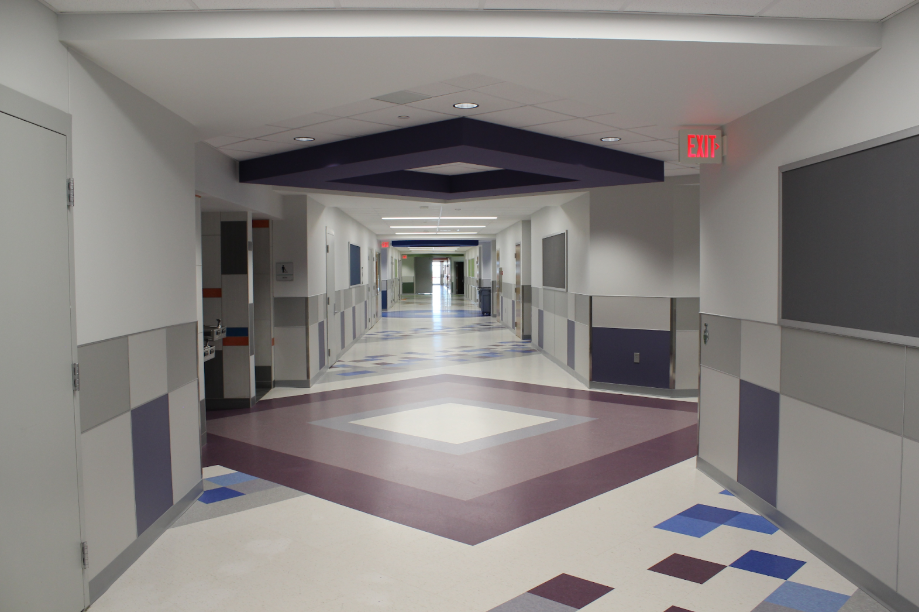
Across the United States, districts are adopting ICF for new school construction. Documented examples include a full ICF school build in Nebraska (Ashbury Hills Elementary) and a large K–12 facility in Texas (Georgetown ISD). These projects demonstrate how reinforced concrete and continuous insulation combine to deliver long-term resilience in education facilities.
ICF wall assemblies can be specified to meet FEMA P-361 and ICC 500 storm-shelter design criteria when detailed accordingly. Each successful project strengthens professional confidence that insulated concrete form construction is no longer a niche method, it has become a defining approach within mainstream resilient design.
Community Resilience and Sustainability
Today’s schools serve as civic anchors, shelters, command centers, and recovery hubs when disasters strike. ICF construction supports that mission by keeping interiors habitable when power is limited and protecting air quality when outdoor conditions are unsafe.
The environmental advantages run parallel. The same properties that enhance safety also reduce energy consumption and operational carbon. Lower heating and cooling loads, longer building life, and fewer material replacements all contribute to district sustainability goals. In this sense, ICF schools are an investment in both community resilience and environmental responsibility.
The Future Standard
As safety codes evolve and weather extremes intensify, ICF schools have become the baseline for responsible construction. School buildings are now expected to protect communities, serve as emergency shelters, and maintain operations after disaster events. Insulated concrete form systems meet each of those demands within a single, continuous envelope.
Our industry increasingly recognizes that safety, comfort, and energy performance belong together. ICF schools make that integration visible. They demonstrate what happens when protection is designed in from the start, when student safety becomes a structural value, not an accessory feature.
As districts and design teams plan the next generation of educational facilities, ICF walls will continue to set the standard for strength, efficiency, and peace of mind.