What is the R-Value?

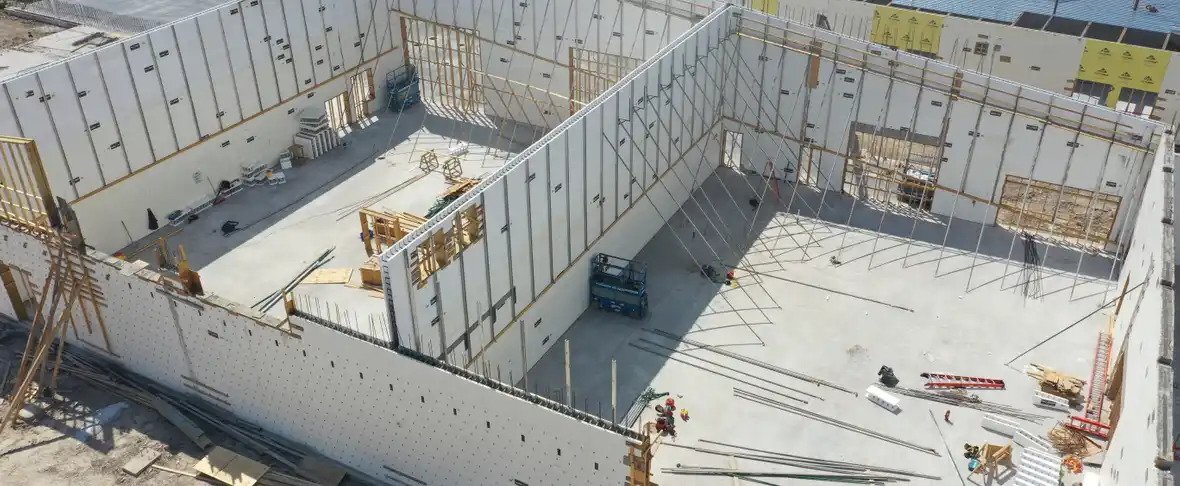
The clear R‑Value of an Fox Blocks is R22, how­ev­er cur­rent Ener­gy codes rec­og­nize the lack of ther­mal bridg­ing in an ICF and the con­tri­bu­tion of the mass con­crete on the influ­ence of the ther­mal per­for­mance. Whole wall cal­cu­la­tions indi­cate a Fox blocks wall assem­bly pro­vides an R24 rat­ing.

The con­tin­u­ous dou­ble lay­er (inside and out­side) of insu­la­tion, the elim­i­na­tion of ther­mal bridg­ing and min­i­mal air infil­tra­tion through the mass con­crete wall assem­bly, allows Fox Blocks walls to per­for­mance in the high per­for­mance wall assem­bly cat­e­go­ry. Com­plet­ing the enve­lope with ener­gy effi­cient win­dows and doors and roof insu­la­tion, Fox Blocks homes can eas­i­ly meet and exceed ener­gy code require­ments and exceed the min­i­mum require­ments for Ener­gy Star and Ener­Guide. A Fox Blocks struc­ture requires 44% less ener­gy to heat and 32% less ener­gy to cool.

Screen Shot 2020 01 16 at 12 36 31 PM
4 Defining Characteristics of High-Performance Buildings
High-per­for­mance build­ings also pos­i­tive­ly impact the envi­ron­ment and pro­vide finan­cial ben­e­fits before and after con­struc­tion.
Is the Fox Blocks ICF product ‘LEED’ rated or certified?
Prod­ucts are not rat­ed or cer­ti­fied under the LEED pro­gram. The over­all build­ing is eval­u­at­ed and assigned a LEED rat­ing. In the selec­tion of build­ing mate­ri­als for a LEED design, Fox Blocks have many ben­e­fits that can enable, enhance or direct­ly con­tribute toward LEED points for the project.
What is the difference between Fox Blocks ICFs and the competitors, and why are Fox Blocks ICFs better? Why should I use Fox Blocks ICFs?
Most ICF blocks share com­mon fea­tures and ben­e­fits. Fox Blocks, as a com­pa­ny, pro­vides 30 years’ expe­ri­ence in prod­uct devel­op­ment, doc­u­men­ta­tion, test­ing and train­ing, as well as ver­sa­til­i­ty in the line of prod­ucts to meet all appli­ca­tions. The key dif­fer­ence comes in the exper­tise and sup­port you get from Fox Blocks. Fox Blocks is the leader in insu­lat­ing con­crete form con­struc­tion – proven in over 100,000 com­mer­cial and res­i­den­tial projects across North Amer­i­ca. Exten­sive resources and sup­port sys­tems are avail­able to ensure your project’s suc­cess from start to fin­ish. Please vis­it our web­site www.Fox Blocks​.com to review our project gallery and find more detailed doc­u­men­ta­tion on the prod­ucts and the appli­ca­tions. Fox Blocks also pro­vides a toll free num­ber for Cus­tomer and Tech­ni­cal Sup­port 8773692562.
Does expanded polystyrene (EPS) present a serious fire hazard?
The EPS in an Fox Blocks has a flame retar­dant that allows the forms to be flame resis­tant. The EPS will melt when exposed to sus­tained tem­per­a­tures over 300°F (149°C). The igni­tion point of the melt­ed styrene is 600°F (315°C) (wood is approx­i­mate­ly 500°F (260°C). Fox Blocks have been test­ed to meet the build­ing code require­ments for flame spread and smoke devel­op­ment, plus Fox Blocks may be used as fire resis­tant rat­ed wall assem­blies in schools and hos­pi­tals.
Image3
The Backbone of Modern Construction: Steel Reinforced Concrete Walls
How do frame in openings?
Fox Blocks has devel­oped the Fox Buck specif­i­cal­ly to frame open­ings such as win­dows and doors. The Fox Buck pro­vides insu­la­tion around the open­ing plus sup­port for the attach­ment of the win­dow or door.
Is installing ICFs a DIY project?
Fox Blocks rec­om­mends that all installers using Fox Blocks ICFs com­plete a Fox Blocks train­ing pro­gram to ensure they have a bet­ter under­stand­ing of the basics. How­ev­er, for first time installers, it is pre­ferred that a Fox Blocks trained, expe­ri­enced installer inspect the instal­la­tion pri­or to place­ment of con­crete and assist in the place­ment of the con­crete, as they are famil­iar with work­ing with con­crete and can ensure the build is struc­tural­ly sound and safe and the walls are con­sol­i­dat­ed prop­er­ly, built straight and plumb.