
How Much Does It Cost to Build a Movie Theater
Costs start with screens, site, and seats. Screen count drives occupant load, egress widths, utilities, and how much back of house space the building requires. When owners ask how much does it cost to build a movie theater, the reliable answer is a structured budget that separates shell and envelope, interior fit out, per screen audiovisual systems, and the soft costs that carry the project from design through opening.
Envelope decisions made early can significantly influence that total. Theater developers increasingly look to insulated concrete form construction for auditoriums and perimeter walls because it combines structure, insulation, airtightness, and acoustic mass in one system, reducing scope overlap and long term operating risk.
Typical Theater Build Costs: Seven Figures New; Lower For Small Retrofits
Ground-up multi-screen projects typically total in the seven figures; small 1–2 screen retrofits that reuse a suitable shell can begin below $1 million. The exact answer to how much does it cost to build a movie theater depends on screen count, site conditions, and local market rates. The range tightens once test-fits lock room sizes, seat counts, and per-screen AV allowances.
Keeping costs organized into four buckets, shell and envelope, interior fit out, per screen AV, and soft costs, helps owners evaluate tradeoffs clearly. Projects that use integrated wall systems such as Fox Blocks ICFs often see tighter cost control in the shell phase because fewer assemblies are required to meet structure, energy, and acoustic targets simultaneously.
What A Theater Budget Must Cover
Early feasibility moves faster when the budget is structured into four buckets that you can tune independently as designs evolve.
Building Shell & Envelope
The envelope sets geometry, durability, airtightness, and the long-term energy profile of the building. Because it is the boundary between auditoriums and adjacent spaces, an integrated wall system that combines structure, insulation, and airtightness can reduce coordination risk at penetrations and control joints while supporting acoustic objectives.
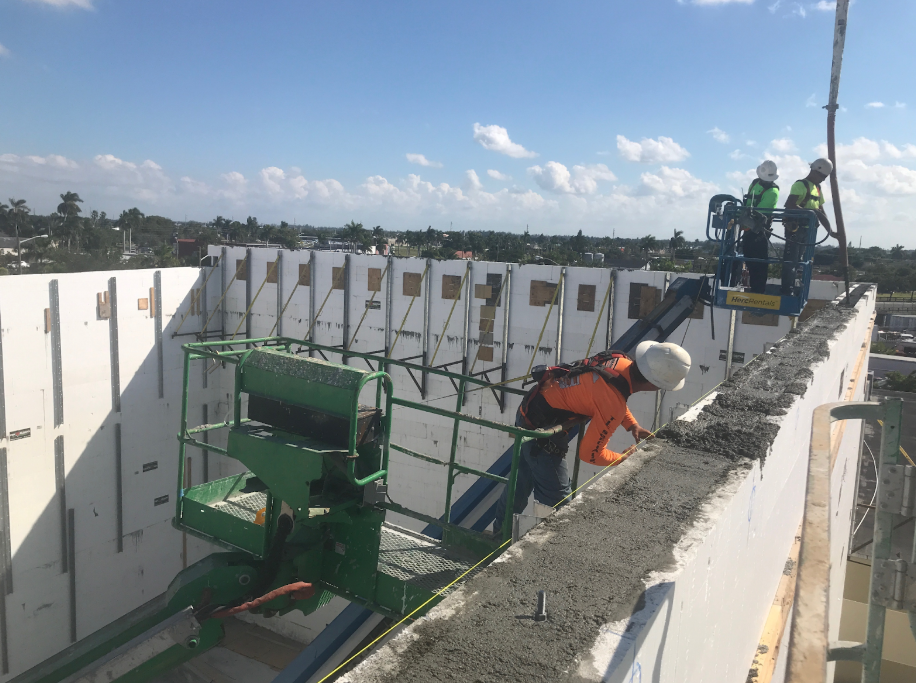
ICF wall systems like Fox Blocks combine reinforced concrete and continuous insulation in a single assembly, allowing the envelope to contribute directly to acoustic isolation and thermal performance. This reduces reliance on layered interior partitions and secondary air barriers, simplifying detailing at penetrations and reducing coordination risk across trades.
Interior Fit-Out (Auditoriums, Lobby, BOH)
Interior costs hinge on seating density, aisle geometry, platform structure, and durable finishes. Auditoriums need raked platforms sized for live loads and sightlines; lobbies concentrate plumbing, power, and concessions; BOH corridors, storage, and staff circulation keep deliveries and waste out of patron routes. Those room geometries and platforms set the constraints for projection throw, screen size, and speaker placement that follow.
ICF construction supports taller wall designs often required for auditorium volumes, screen heights, and projection geometry. These tall wall assemblies can be built efficiently while maintaining structural and acoustic performance, which helps keep schedules predictable and interior framing simpler.
Projection, Screens/LED, Audio & Control (Per Screen)
Per screen audiovisual budgets vary based on projection type, screen size or LED walls, premium audio formats, and control integration. Independent venues often simplify to reduce capital costs, while larger theaters invest in premium experiences that support higher ticket pricing.
A quieter, more acoustically stable envelope allows audio systems to perform as designed without excessive interior sound isolation layers, protecting AV investment and improving consistency between auditoriums.
Seating, Platforms & Sightlines
Seat selection drives density, electrical requirements, and platform geometry. Power recliners reduce seat count and increase electrical rough ins. Standard stadium seating keeps density higher and capital lower.
Envelope performance indirectly affects these choices by stabilizing indoor temperatures and humidity, improving occupant comfort across long showtimes without oversized mechanical systems.
Life Safety, Egress & Accessibility
Egress widths, door hardware, aisle geometry, lighting levels, and accessible seating locations flow from occupant load calculations. Fire alarm systems, emergency power, and emergency voice communication require ceiling and riser space that must be coordinated early.
ICF wall assemblies simplify fire resistance compliance and reduce the number of rated wall transitions, which can streamline approvals and inspections.
Soft Costs, Financing & Contingency
Architectural and engineering services, geotechnical work, permits, special inspections, commissioning, insurance, legal fees, construction loan interest, and contingency are material. Keeping these as a separate subtotal helps avoid burying risk inside trade numbers.
Integrated construction systems can reduce redesign cycles and RFIs, supporting more predictable soft cost outcomes.
How Much Does A Movie Theater Cost? Two Common Scenarios
Owners typically evaluate two pathways, each with different risk profiles and levers.
1–2 Screen Retrofit (Existing Shell)
Retrofits concentrate spending on acoustics, platforms, seating, and per screen AV while leveraging existing structure and utilities. This approach can shorten schedules and reduce site work, though hidden conditions and unanticipated code upgrades often consume contingency.
In some cases, ICF interior demising walls are introduced to improve sound isolation between auditoriums where existing construction falls short.
6–8 Screen Ground-Up
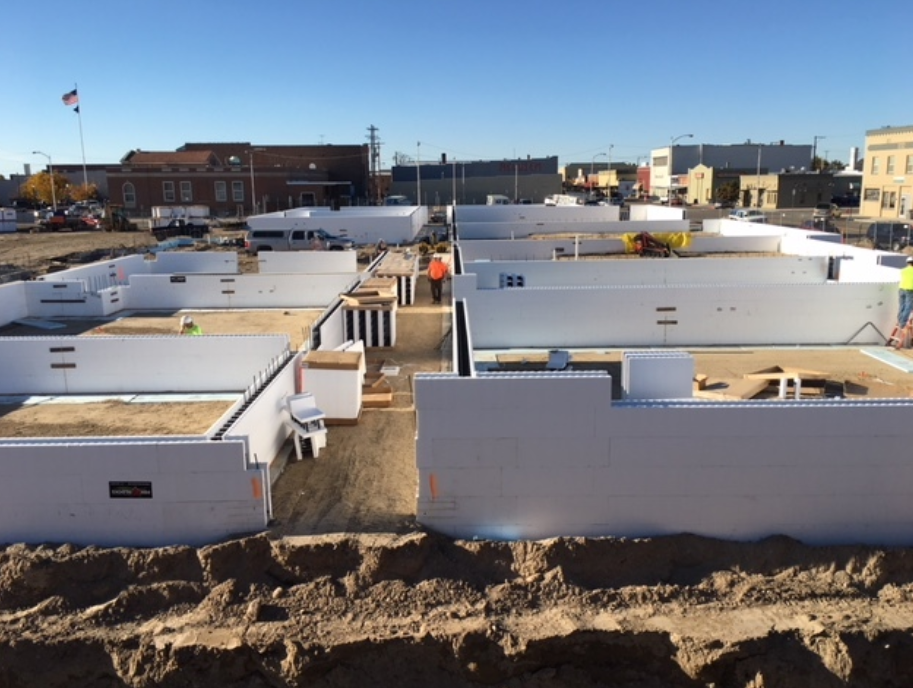
Ground up projects add site development, full shell and envelope construction, new utilities, and parking. While per screen AV allowances grow in absolute dollars, shell costs distribute across more auditoriums and shared spaces.
Using Fox Blocks ICF systems for exterior and auditorium walls can reduce mechanical loads, simplify acoustic design, and improve energy performance across the entire complex. These advantages become more meaningful as screen count increases and operational costs scale.
Cost Drivers And Sensitivities You Should Model
Seat type and count remain major cost levers. Screen and projection type, premium audio formats, concession depth, envelope performance targets, and local utility upgrades also influence totals.
Envelope choices are often overlooked during early budgeting, yet they directly affect HVAC sizing, acoustic construction, and long term utility spend. Align alternates with systems that are readily available in your market and proven across similar building types.
Why Envelope Choices Change Total Cost Of Ownership
For auditoriums, mass, airtightness, and decoupling control low-frequency sound; the building envelope should support these targets so interior partitions do less work. Early coordination around auditorium sound isolation aligns wall mass, airtightness, and interior separations with the theater’s layout. Once sound is contained through mass and airtightness, the same envelope qualities reduce thermal loads and help trim utility spending over the life of the building.
Fox Blocks insulated concrete form wall assemblies combine reinforced concrete and continuous insulation in a single stay-in-place form. To meet auditorium and theater vertical space requirements, Fox Blocks can be designed and constructed as tall walls, which expedites construction while maintaining structural and acoustic performance. On theater projects, the integrated mass and thermal continuity can reduce the number of separate acoustic and air-barrier layers, simplify detailing at penetrations, and reduce trade coordination, resulting in more stable acoustics and improved total cost of ownership.
Lease And Remodel Vs. Building New
Lease remodel projects can reduce site work and utility scope but may constrain auditorium width, platform height, and duct routing. Ground up construction restores full control over geometry and separations at a higher initial capital cost.
For theaters pursuing premium audio, seating, and energy performance, new construction using ICF systems often provides greater design flexibility and long term value.
The Practical Budget Method That Holds Up Through Procurement
At the end of feasibility, the durable answer to how much does it cost to build a movie theater is a structured range with a transparent method. Keep the four buckets, shell/envelope, interior fit-out, per-screen AV, and soft costs, separate. Use test-fits to set room sizes and seat counts, then track alternates with clear adds/deducts so substitutions don’t force cascading redesign. Projects that anticipate lead times for electrical gear, seating, and specialized AV equipment hit numbers and dates more reliably.
Plan Your Theater Build With Fox Blocks
Fox Blocks designs insulated concrete form wall systems for performance driven buildings, including theaters, auditoriums, schools, and commercial entertainment venues. We support design teams with envelope detailing that aligns acoustic separation, energy efficiency, and constructability goals while simplifying critical transitions.
Contact our team today for specification support or early-phase budgeting guidance.