
Distribution Center Construction: What to Expect from Leading Industrial Builders
Distribution facilities sit at the center of modern supply chains. They operate continuously under high loads, dense traffic, and increasing automation. Because of these demands, distribution center construction follows a different decision framework than general warehouse development, with greater emphasis on durability, coordination, and long-term operational reliability.
What Defines Distribution Center Construction
A distribution center is engineered around continuous movement, not passive storage.
Throughput-Driven Layout And High-Cycle Use
Distribution centers are designed for throughput rather than storage alone. High-volume material movement, frequent truck cycles, and interior automation systems place sustained stress on floors, walls, and structural frames. Clear heights continue to increase to support vertical racking and automated retrieval systems, while interior layouts prioritize circulation efficiency, equipment access, and flexibility.
System Choices Shaped By Continuous Operations
These operational realities shape construction from the outset. Builders must account for continuous use, limited downtime for repairs, and the likelihood of future expansion or reconfiguration. Facilities that perform well over time are those where structural and enclosure systems are selected with these pressures in mind rather than optimized only for initial cost.
Preconstruction Translation From Operations To Buildable Systems
Leading industrial builders approach this phase by translating operational requirements into constructible systems early. Racking layouts, equipment loads, traffic flow, and maintenance access are evaluated during preconstruction so that structural grids, slab design, and wall assemblies support how the facility will actually function, not just how it appears on drawings.
Site Selection And Pre-Construction Planning
Site selection establishes the physical constraints that shape layout efficiency, construction sequencing, and long-term operating reliability before design work begins.
Transportation Access And Site Logistics
Distribution centers depend on reliable access to highways, ports, rail hubs, or intermodal facilities to support consistent delivery schedules. Site layouts must accommodate high truck volumes, staging areas, and turning radii without creating congestion at dock faces or disrupting internal circulation.
Leading industrial builders engage civil engineers and preconstruction teams early to align access points, pavement design, yard layouts, and construction logistics with projected throughput. Planning material staging, crane access, utility routing, and earthwork sequencing at this stage protects schedule reliability once vertical construction begins.
Soil Conditions, Drainage, And Earthwork Implications
Subsurface conditions control how foundations and slabs perform over time. Soil bearing capacity, groundwater level, and site drainage determine excavation scope, subgrade treatment, and long-term settlement risk across the footprint. On large facilities, uneven support can create floor tolerance drift that disrupts racking alignment and automated equipment.
Industrial builders prioritize geotechnical work and disciplined site prep because uniform slab support reduces corrective work after occupancy and protects schedule reliability.
Design And Engineering Priorities In Distribution Centers
Design and engineering decisions establish the structural, spatial, and code-driven constraints that determine how efficiently a distribution center can be built and operated.
Clear Span, Height, And Structural Coordination
Structural systems must deliver wide clear spans with minimal interior obstructions while supporting heavy roof loads and lateral forces. Column spacing, framing depth, and bracing layouts are coordinated to align with racking systems, conveyors, and automation equipment that may evolve over time.
These decisions require close collaboration between structural engineers, equipment planners, and construction teams. Builders frequently facilitate early coordination workshops to resolve conflicts before drawings are finalized. Misalignment at this stage often results in reduced storage density, costly redesigns, or operational compromises that persist for the life of the facility.
Fire Protection, Life Safety, And Code Requirements
High-pile storage classifications and fire separation requirements strongly influence building layout and wall placement. Sprinkler density, fire wall locations, smoke control strategies, and egress planning must be integrated early rather than treated as overlays added late in design.
Builders familiar with industrial codes understand how these requirements affect enclosure continuity, penetrations, and sequencing. Early coordination reduces the risk of late-stage revisions that disrupt construction flow or delay occupancy approvals.
Envelope Performance As An Operating Cost Variable
Distribution centers operate for long hours, often with conditioned spaces supporting personnel, equipment, or temperature-sensitive goods. Heat gain and loss across expansive wall and roof areas translate directly into energy demand over decades of operation.
As energy codes evolve, envelope systems are increasingly evaluated on lifecycle impact rather than initial cost alone. Thermal continuity, air control, and durability all contribute to predictable operating expenses, reduced mechanical strain, and improved interior consistency.
Foundations And Structural Systems
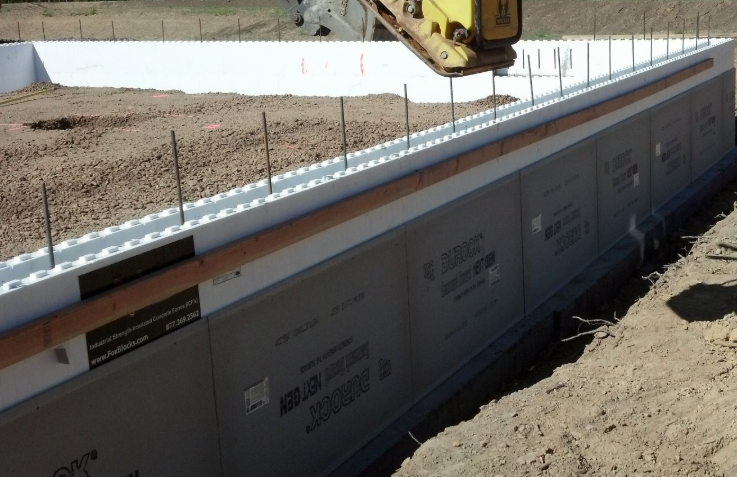
The foundation and structural package must carry continuous operational loads while holding the tolerances required for racking, forklifts, and automation systems.
Slab Design And Load Management
Slab-on-grade systems in distribution centers must support concentrated point loads from racking, forklifts, and automated equipment. Reinforcement strategies, joint spacing, subgrade preparation, and concrete mix design are selected to limit cracking, curling, and long-term deterioration.
Because slab repairs disrupt operations and automation alignment, industrial builders prioritize durability and constructability over short-term material savings. Floor performance is treated as a core operational asset rather than a commodity element.
Structural Systems Used In Distribution Centers
Steel framing, tilt-up concrete panels, and cast-in-place concrete systems are commonly used depending on project scale, schedule constraints, and regional practice. Each approach carries implications for enclosure timing, labor coordination, and long-term performance.
Effective distribution center construction aligns structural system selection with operational demands, environmental exposure, and lifecycle expectations rather than defaulting to a single method across all projects.
Major Building Components And System Integration
Major building components must work together as a coordinated system to withstand daily abuse, maintain enclosure integrity, and support uninterrupted material flow.
Wall Systems And Impact Exposure
Walls in active distribution environments experience frequent contact from pallets, forklifts, and dock equipment. Assemblies must resist impact without recurring repair cycles that interrupt operations or create safety concerns in high-traffic zones.
Roof Assemblies And Thermal Continuity
Roof systems span large uninterrupted areas and play a significant role in thermal performance. Consistent detailing at roof-to-wall interfaces reduces air leakage, protects insulation continuity, and supports predictable energy performance across seasons.
Dock Doors, Openings, And High-Traffic Zones
Loading docks represent some of the most abused areas of a facility. Durable detailing at openings, jambs, and transitions reduces maintenance exposure and supports safer, more efficient material handling under constant use.
Construction Timeline Expectations
Distribution centers are often delivered under aggressive schedules tied to logistics contracts or expansion timelines. Projects typically move from site work into foundations, framing, enclosure, and interior build-out in overlapping phases.
For large distribution facilities, experienced builders often target enclosure dry-in within the first half of the overall schedule, allowing interior systems, racking installation, and automation commissioning to proceed without weather-related disruption.
Schedule reliability depends less on acceleration and more on sequencing, material procurement, and early coordination across trades.
Builders with industrial experience reduce delays by locking critical structural and enclosure decisions early and maintaining consistent trade flow rather than compressing activities late in the schedule.
Cost Drivers In Distribution Center Construction
Major cost drivers include structural systems, slab and foundation work, and envelope performance requirements. Labor efficiency and sequencing frequently determine whether budgets hold as projects scale.
Additional cost sensitivity often comes from slab thickness requirements, joint detailing, fire protection density, and wall durability near high-traffic zones. Late design changes carry disproportionate cost impacts due to facility size. Experienced builders manage risk by resolving system decisions early and avoiding scope changes that cascade across large footprints.
Operational Performance Bridge: Construction Decisions And Long-Term Facility Behavior
The relationship between construction decisions and operational performance becomes clear once a facility is occupied.
Structural alignment affects automation reliability.
Wall durability influences maintenance downtime.
Envelope performance shapes long-term energy consumption and interior working conditions.
Facilities that perform consistently over time are those where decisions were made with operations in mind. Builders who connect design intent to day-to-day use deliver buildings that support throughput, safety, and adaptability without constant intervention.
Durability And Long-Term Performance Expectations
Distribution centers are expected to operate for decades with minimal disruption. Walls must withstand impact, structural systems must tolerate vibration and thermal movement, and envelopes must maintain performance without frequent intervention.
Owners evaluate durability as a measure of operational continuity rather than material longevity alone. Systems that age predictably reduce maintenance costs and support uninterrupted use.
Why Builder Expertise Matters In Industrial Projects
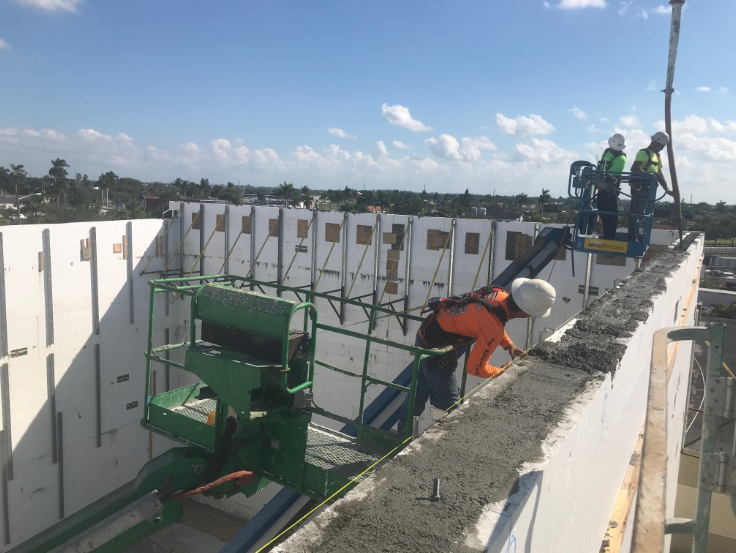
Industrial builders understand how small detailing choices influence long-term behavior at scale. Their experience allows them to anticipate coordination challenges, manage sequencing proactively, and integrate systems that perform reliably under constant demand.
This expertise directly affects how distribution center construction translates from drawings into real-world performance.
How Insulated Concrete Forms Support Industrial Construction Goals
As distribution centers increase in size and complexity, wall systems that combine structural capacity with thermal performance gain attention. Insulated Concrete Forms provide reinforced concrete walls with continuous insulation in a single assembly.
Performance Drivers That Push Teams Toward ICF Walls
Fox Blocks ICFs integrate structural strength, impact resistance, and thermal continuity, supporting large uninterrupted wall sections common in distribution facilities.
Where ICFs Fit Best In Distribution Center Construction
Builders familiar with ICF systems often note enclosure efficiency and reduced coordination complexity, particularly on projects where durability and energy performance drive long-term value. The role of ICFs within distribution center construction remains project-specific, but they align well with facilities prioritizing resilience, predictable operating costs, and long service life.
Partner With Fox Blocks For Industrial-Grade Wall Systems
Fox Blocks engineers and manufactures insulated concrete form systems designed for demanding commercial and industrial environments. Each system supports structural performance, thermal continuity, and efficient assembly at scale. Contact our team today to discuss how ICF construction can support your next industrial project.