
ICF Blocks For Residential Construction: Reliable, Long-Lasting Walls
A home should feel solid, quiet, and safe through every season. That is why many owners and builders look for the best ICF blocks when planning new walls. They are really choosing how the wall will handle heat, cold, moisture, and noise so the structure stays comfortable and durable through decades of real weather and everyday use.
How ICF Blocks Work In Residential Walls
At its core, an insulated concrete form wall is straightforward:
Crews stack hollow foam stay-in-place forms that resemble oversized building blocks, made from expanded polystyrene, then install steel reinforcement and fill the cavity with concrete. In most insulated concrete form systems, that expanded polystyrene is a rigid, closed-cell foam designed specifically to stay in place as part of the wall.
EPS in ICF walls behaves differently from the dense extruded boards many people picture when they think of rigid foam: it is protected by concrete, allows limited vapor diffusion so the assembly can dry, and provides stable thermal resistance over the life of the wall when it is detailed and installed correctly.
Once the concrete cures, the foam stays in place on both sides of the wall as continuous insulation, reducing thermal bridges and helping control air movement.
The best ICF blocks are designed so each course interlocks tightly, supports straight, plumb walls, and provides fastening strips that make it easier to attach finishes both inside and out.
Why ICF Walls Perform Well In Homes
ICF walls change how a house responds to daily weather and long-term loads.
Everyday Comfort, Strength, And Noise Control
The continuous foam insulation and high-mass concrete core make temperature swings slower and less extreme, which helps heating and cooling systems run more steadily instead of cycling hard to chase outdoor conditions. The concrete core also resists wind loads and impact in ways framed walls cannot, which appeals to owners who live in storm-prone regions or simply want a stronger envelope. Because the assembly is dense and well sealed, many homeowners notice that interior spaces are quieter, especially along busy roads or near commercial areas.
Key in-home benefits include:
More stable indoor temperatures from continuous insulation and thermal mass
Stronger walls that help resist wind and impact loads
Quieter rooms thanks to dense, well-sealed wall assemblies
Basements And High-Performance Homes
Those same characteristics explain why insulated concrete forms are especially effective for basements and high-performance homes. Below-grade walls must handle soil pressure, moisture, and temperature differences at the same time, and the combination of reinforced concrete and foam works well in that environment when drainage and waterproofing are detailed correctly.
In cold climates or designs that target very low energy use, the steady interior temperatures and reduced air leakage help keep comfort levels more uniform from floor to floor. When people talk about the best ICF blocks for a high-performance or near net-zero house, they are usually thinking about systems that support this kind of stable, low-draft interior.
Cost And Long-Term Value Of ICF Homes
Cost still plays a major role in whether insulated concrete forms make sense for a particular project. Material and labor costs per square foot of wall are typically higher than for basic stick framing, and the schedule must account for specialized crews and concrete placement.
Upfront Costs On ICF Projects
ICF construction usually adds cost on the front end because:
Crews must place concrete and reinforcement correctly inside the forms
Forms themselves cost more than basic framing lumber and cavity insulation
The schedule has to allow for concrete delivery, placement, and curing
Those factors raise initial wall costs even when the rest of the project follows familiar residential practices.
Where Long-Term Value Shows Up
At the same time, the wall is handling structure, insulation, and much of the air control layer in one integrated assembly, so there may be fewer separate steps, fewer trades to coordinate, and less risk that insulation will be compressed, misaligned, or cut through by later work.
For many projects, the best ICF blocks will show a clear cost difference from basic framed walls, but that gap has to be weighed against the way the wall performs after construction is complete. Over the life of the home, owners see value when lower energy use, fewer comfort complaints, and a durable envelope offset the higher up-front investment.
Some projects now extend that long-term value on the sustainability side by pairing insulated concrete forms with concrete mixes that lower cement content. Supplementary cementitious materials such as fly ash, slag, or finely ground limestone can reduce the embodied carbon of the wall while still meeting strength and durability requirements when they are proportioned and specified correctly for local codes and conditions.
Design Flexibility In ICF Homes

Current insulated concrete forms give designers more room to play with massing and openings than early systems did. A house built with these systems does not have to look like a plain concrete box. Architects can vary rooflines, wall heights, and openings while still working within engineered limits for the forms and the concrete core.
Exterior finishes can range from fiber-cement siding to brick veneer, manufactured stone, and stucco, all attached to the fastening strips built into the forms. Inside, most walls accept standard drywall, trim, and fixtures, so the finished rooms feel familiar even though the structure behind the paint is very different from a framed cavity wall.
How To Compare ICF Manufacturers, Suppliers, And Block Systems
Choosing among different products and manufacturers becomes the next decision once an owner or builder has committed to an ICF approach. There are many ICF companies and ICF block manufacturers on the market, and their systems share the same basic concept while differing in details that affect how easy they are to build with and how consistently they perform.
When you compare systems, it helps to look beyond the foam and plastic and ask how each brand handles reinforcement, how straightforward its forms are for crews to stack and brace, and whether experienced local contractors already build with that specific line of insulated concrete forms.
Key selection checks include:
Major ICF manufacturers are members of the ICFMA
All ICFs are required to meet building code requirements and post a Compliance Report
Reinforcement detailing and engineering support for typical residential wall layouts
Ease of installation for the crews who will actually stack, brace, and pour the forms
Availability of local installers and contractors who have been trained and are familiar with the brand
Block Design And On-Site Behavior
Some of the most important block differences show up in how they handle real jobsite conditions:
Foam density and block size, which affect rigidity and handling
Web and tie design, which influence alignment, fastening, and concrete flow
The range of specialty blocks for corners, lintels, and brick ledges reduces field cutting and custom forming
The best ICF blocks balance sturdy forms that resist blowouts with predictable interlocking and clear marking so installers can keep walls straight and reinforcement where it belongs.
Manufacturer Support And Distribution Networks
Support and distribution matter just as much as the block design itself. Reliable ICF manufacturers back their products with engineering, detailing support, and training so crews understand bracing, pour rates, and connection details before they arrive on site. Well-developed ICF supplier networks support project timelines by making forms and accessories available during major foundation and framing phases.
When insulated concrete forms manufacturers offer accessible technical representatives and clear documentation along with local stocking dealers, builders are less likely to encounter surprises in the field and more likely to deliver the wall performance their clients expect.
When To Use Full-ICF Walls Versus Hybrid Construction
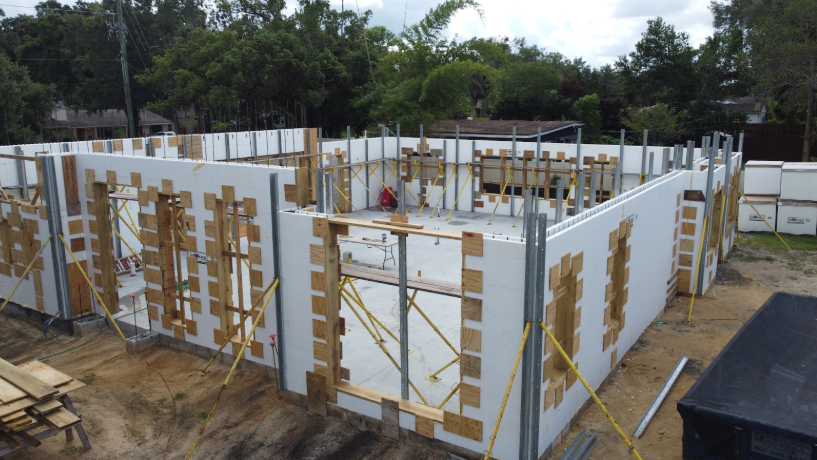
Not every project will use insulated concrete forms from footing to roof, so it pays to decide where they deliver the greatest benefit. Full-ICF homes, where both basement and above-grade walls are built from forms, tend to offer the most consistent temperature control and sound performance because the entire enclosure shares the same high-mass, well-insulated profile.
Hybrid approaches use ICF for the basement or foundation walls and conventional framing above, which can lower initial costs and align with local framing practices while still improving comfort and moisture control at the most exposed, hard-working part of the structure. The key is matching the wall system to the performance goals, budget, and available crews for each job.
Why Fox Blocks Fit Best ICF Blocks Criteria
Once someone commits to ICF, details like engineering, field support, and dealer coverage start to separate one system from another.
How Fox Blocks Align With Key Selection Factors
Within this landscape, Fox Blocks is a proven option for residential work because its forms are engineered for reinforced concrete walls, interlock consistently, and are backed by a strong distributor and technical support network. When owners and builders look for the best ICF blocks, they tend to prefer systems that combine dependable manufacturing, code-recognized performance, and accessible field support.
What Strong ICF Systems Deliver After Move-In
The characteristics that define a strong insulated concrete form system are the same ones that shape long-term satisfaction after move-in.
Homes built with well-designed forms and properly detailed concrete cores tend to feel consistently solid from room to room.
When ICF manufacturers provide clear guidance on waterproofing, window and door openings, and mechanical penetrations, it becomes easier for builders to protect those advantages and avoid the moisture problems that can show up when details are improvised in the field.
That kind of predictable, repeatable performance is what most owners are searching for when they start reading about concrete and foam wall systems and asking which products really qualify as the best ICF blocks.
Choose Fox Blocks ICF Walls For Reliable Residential Performance
Fox Blocks insulated concrete forms are engineered for code-compliant residential walls and backed by technical support and a strong dealer network. Our forms help builders deliver solid, energy-efficient homes with predictable results from the footing to the roofline. Contact us today for more information.