
How to Get Energy-Efficient Walls with Insulated Concrete Forms

Building a Year-Round, Energy-Efficient and Durable Cabin with Fox Blocks ICF
Cabins and cottages often start as a second home or weekend retreat. ICF construction ensures year-round use of the cabin.
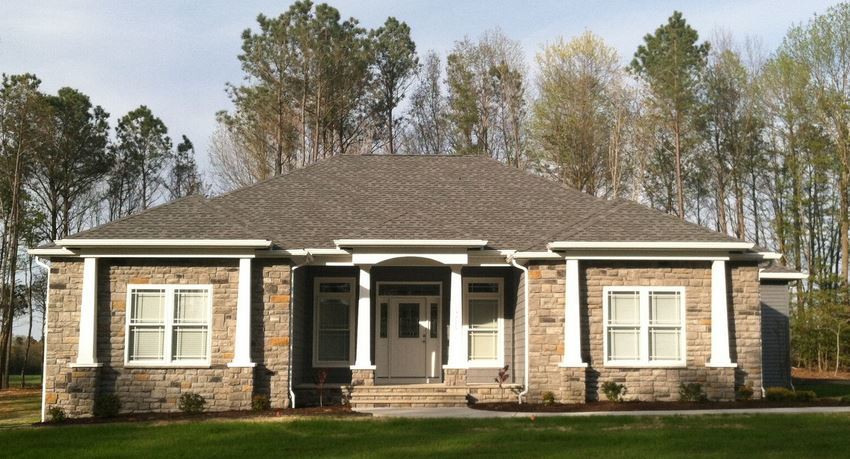
MILTON RESIDENCE
The owners wanted an affordable custom home that could withstand Chesapeake Bay weather.
Our Company
Based in Omaha, Nebraska, Fox Blocks brings you the broadest dealer supply network in North America. As an ICF leader, we constantly strive to deliver the best education and training, the most advanced BIM support and the best overall service support in the industry.
Can you build and pour concrete in cold weather?
Yes. The forms insulate the concrete and enhance the curing process. The top of the forms, or exposed concrete areas will need to be covered, temporarily, with insulation to prevent the exposed concrete from freezing. Fox Blocks projects can be constructed any time of the year, no delays for cold weather.
Is installing ICFs a DIY project?
Fox Blocks recommends that all installers using Fox Blocks ICFs complete a Fox Blocks training program to ensure they have a better understanding of the basics. However, for first time installers, it is preferred that a Fox Blocks trained, experienced installer inspect the installation prior to placement of concrete and assist in the placement of the concrete, as they are familiar with working with concrete and can ensure the build is structurally sound and safe and the walls are consolidated properly, built straight and plumb.
Is There a Top and Bottom on ICF Blocks?
Fox Blocks forms have a reversible interlock system on all blocks. The robust interlock allows the blocks to fit together very tightly, eliminating any requirement for adhesives. A reversible interlock speeds up the installation.
Are there different types of Expanded Polystyrene (EPS)?
EPS is listed basically under four property classifications – Type I, II, III and IV. The characteristics are based on the density of the molded foam which defines the product type. Fox Blocks ICFs are manufactured as a Type II EPS with a density of approximately 1.5 pounds per cubic foot.
Is EPS the same as XPS?
No, these insulation products are quite different. EPS is closed cell expanded polystyrene, while XPS is a closed cell extruded polystyrene. The properties, applications and costs of each are quite different. The majority of ICFs are manufactured with EPS.
What is EPS made from?
Polystyrene is virgin material, manufactured from petroleum. Polystyrene beads are expanded with steam heat to be up to 40 times their original volume and then the expanded beads are molded again by steam heat into 25⁄8″ rigid insulation panels to create a Fox Blocks ICF.