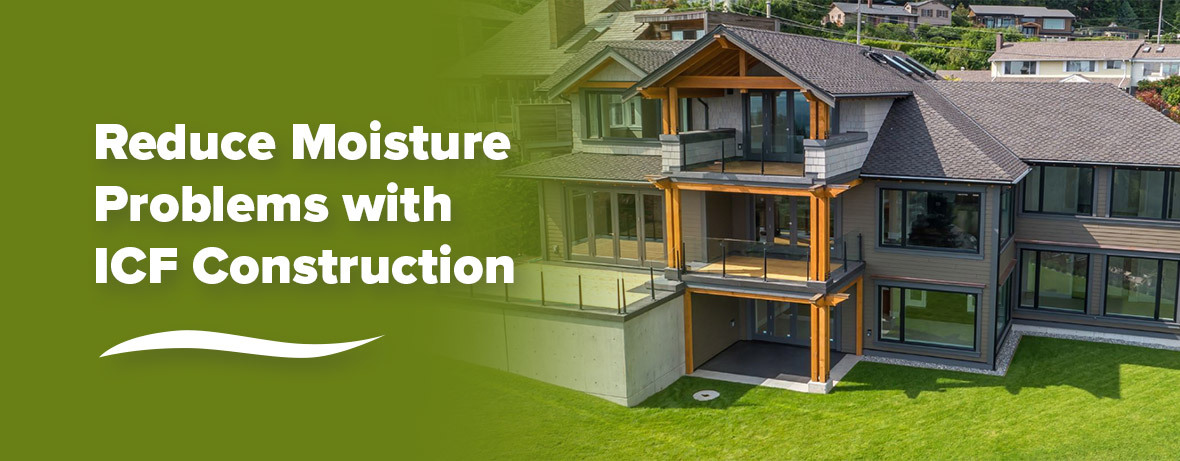
Reduce Moisture Problems with ICF Construction
You can avoid stud-framing moisture problems by choosing a moisture-resistant insulated concrete form (ICF) foundation for your new home.

The Upside of Digging Down: Why Adding a Basement to Your New Build is a Smart Investment

How Much Does It Cost to Pour a Foundation?
Building a strong and reliable foundation is a significant step in the construction of any home or building. The cost of this process varies depending on foundation type, material, and labor requirements.

Exterior Wall Thickness: How Thick Should Your Walls Be?
The exterior wall thickness of a home significantly impacts the house’s energy efficiency, disaster resistance, and IEQ. Learn how thick exterior walls should be.

The Importance of Contractor Training and Product Knowledge

Insulated Concrete Forms (ICF) Vs. Wood-Frame Construction
Insulated concrete forms (ICF) create a more energy-efficient, quiet, and healthy building than one built with wood-frame construction. ICF buildings are also more resistant to disaster, fire, insect, and moisture intrusion than wood-frame structures.

Understanding the ENERGY STAR Rating System for Better Efficiency

Shear Walls vs. Load Bearing Walls
When constructing a building, ensuring its stability and resilience is critical. Two essential components that play crucial roles in building stability are shear walls and load bearing walls.

Is ICF Construction Worth the Cost for Commercial Buildings?
ICF construction for commercial buildings has skyrocketed over the past few years. ICF benefits ranging from sound insulation to durability to building strength and disaster resistance have piqued a lot of interest for builders and architects. But it has some scratching their heads, mistakenly thinking ICF is more expensive and then wondering, “Is ICF construction cost worth it?”

Controlling Commercial Construction Labor Costs with ICF
Controlling Commercial Construction Labor Costs with ICF