The Complete Guide to Disaster Resilient Construction with ICF
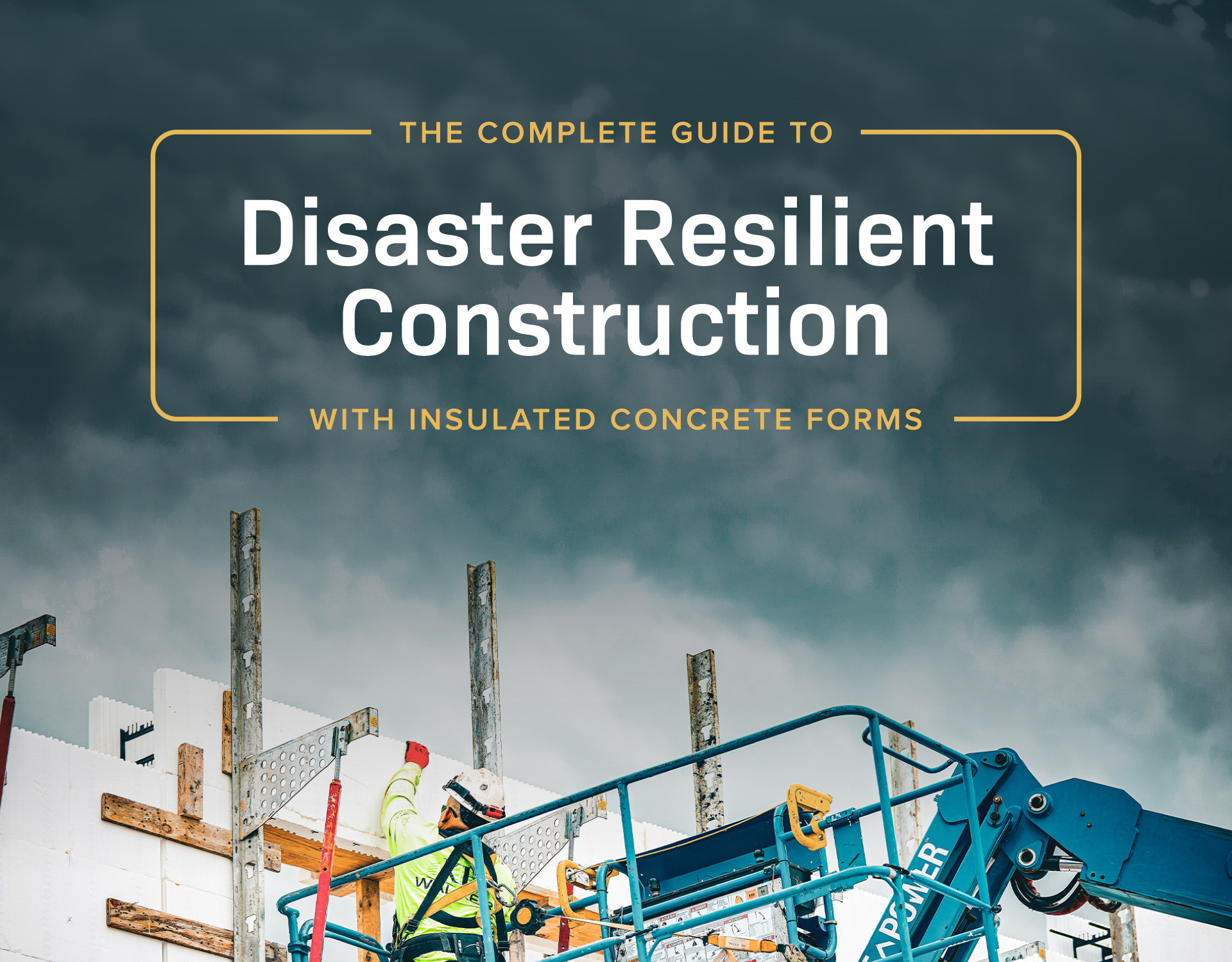
The fire doesn't negotiate. The flood doesn't wait. The wind doesn't care what you use.
When it's over, when the storm has passed, and the smoke has cleared, one question is left standing in the rubble:
What survived?
Not what looked good on the spec sheet. Not what came in under budget. Not what was fastest to frame.
What. Actually. Survived.
Concrete Survives.
That's not an opinion; it's a pattern repeating after every major hurricane, wildfire, and flood on record. Reinforced concrete walls – specifically, Insulated Concrete Form construction – routinely outperform wood-frame structures when disaster strikes.
We engineered Fox Blocks® for that house.
Insulated Concrete Forms aren't a trend, a green building checkbox, or just a premium upgrade. They embody everything the construction industry has learned from every disaster it's seen.
6 IN 1: THE ELEMENTS THAT
MAKE OUR ICF WALLS SUPERIOR
- 1
OUR CONCRETE FORM HAS REBAR SUPPORT
It’s one of the strongest wall assemblies available for below and above-grade walls, exceeding safety/resilience/durability requirements for FEMA-ATFP Federal Military Standards.
- 2
CONTINUOUS DOUBLE-LAYER INSULATION
Provides superior thermal comfort, energy savings, and sound mitigation. An R-value of 23.5+ plus whole-wall high performance enables Zero Energy Ready builds.
- 3
SOLID MONOLITHIC WALL AIR BARRIER
Exceeds the code minimum for airtightness. This natural continuous air barrier creates comfortable indoor environments with enhanced climate control.
- 4
A CONTINUOUS NATURAL VAPOR BARRIER
Create spaces with healthier air quality. Our wall assemblies have a PERM rating of <1.0, virtually eliminating moisture intrusion, mold and rot from your list of concerns.
- 5
FULL HEIGHT EMBEDDED FASTENING STRIPS
Gives you solid attachment for any exterior or interior finish, eliminating thermal bridging. They’re strong enough to work with everything from brick to siding.
- 6
REVERSIBLE INTERLOCK
Our block design saves construction time and reduces product waste, with a solid 2” parallel friction fit connection that’s easy, versatile and fast to assemble.
What Are Insulated Concrete Forms?
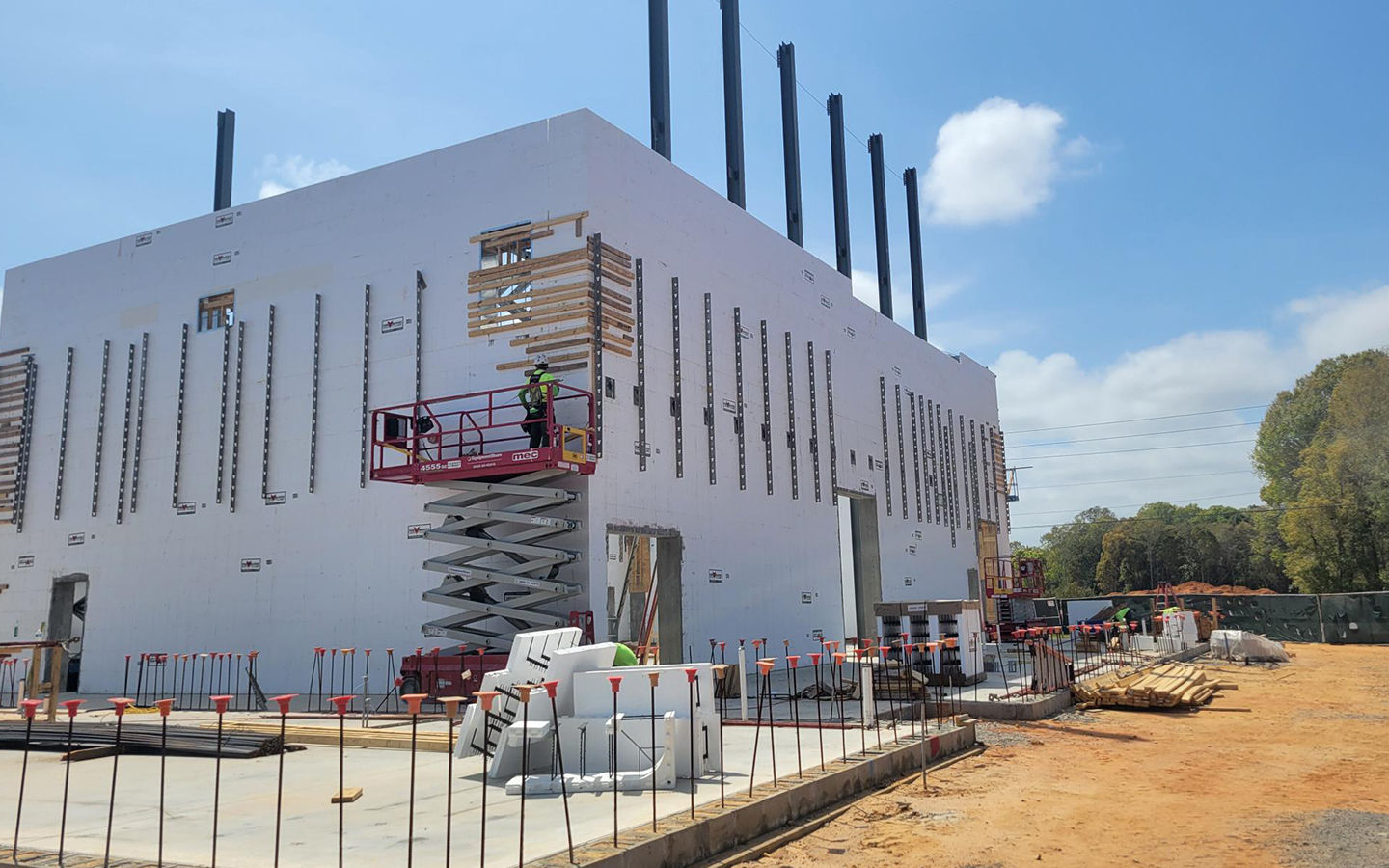
Insulated Concrete Forms (ICFs) are stay-in-place concrete forming systems made from expanded polystyrene (EPS) foam. Workers stack them, reinforce them with steel rebar, and then fill them with poured concrete. The result is a continuous, monolithic wall that combines the structure, insulation, an air barrier, and a vapor barrier all in one.
Fox Blocks Insulated Concrete Forms are precision-manufactured ICFs, built for residential and commercial projects across North America. Traditional concrete forms get stripped and removed once the pour is done. But Fox Blocks stay put permanently, giving you six integrated performance systems in a single wall assembly.
The Case for Disaster Resilient Construction
Why the Industry Can No Longer Ignore This
The United States experienced 28 separate billion-dollar weather and climate disasters in 2023 alone, the highest number ever recorded in a single year. Globally, insured losses from natural catastrophes have risen significantly every decade since the 1980s.
Builders, contractors, architects, and developers now operate in a risk environment far different from the one for which light-frame construction standards were designed. The materials and methods that defined 20th-century homes and commercial buildings just aren't cut out for today's challenges. They can't withstand sustained 150-mph winds, wildfire ember storms, or "500-year" flood events that now hit every 20 years. And they certainly weren't built for polar vortex temperature drops that easily overwhelm poorly insulated structures.
Wood-framed construction wasn’t designed for it, but Insulated Concrete Form Construction is.
ICF Versus Wood Frame Construction: The Full Comparison
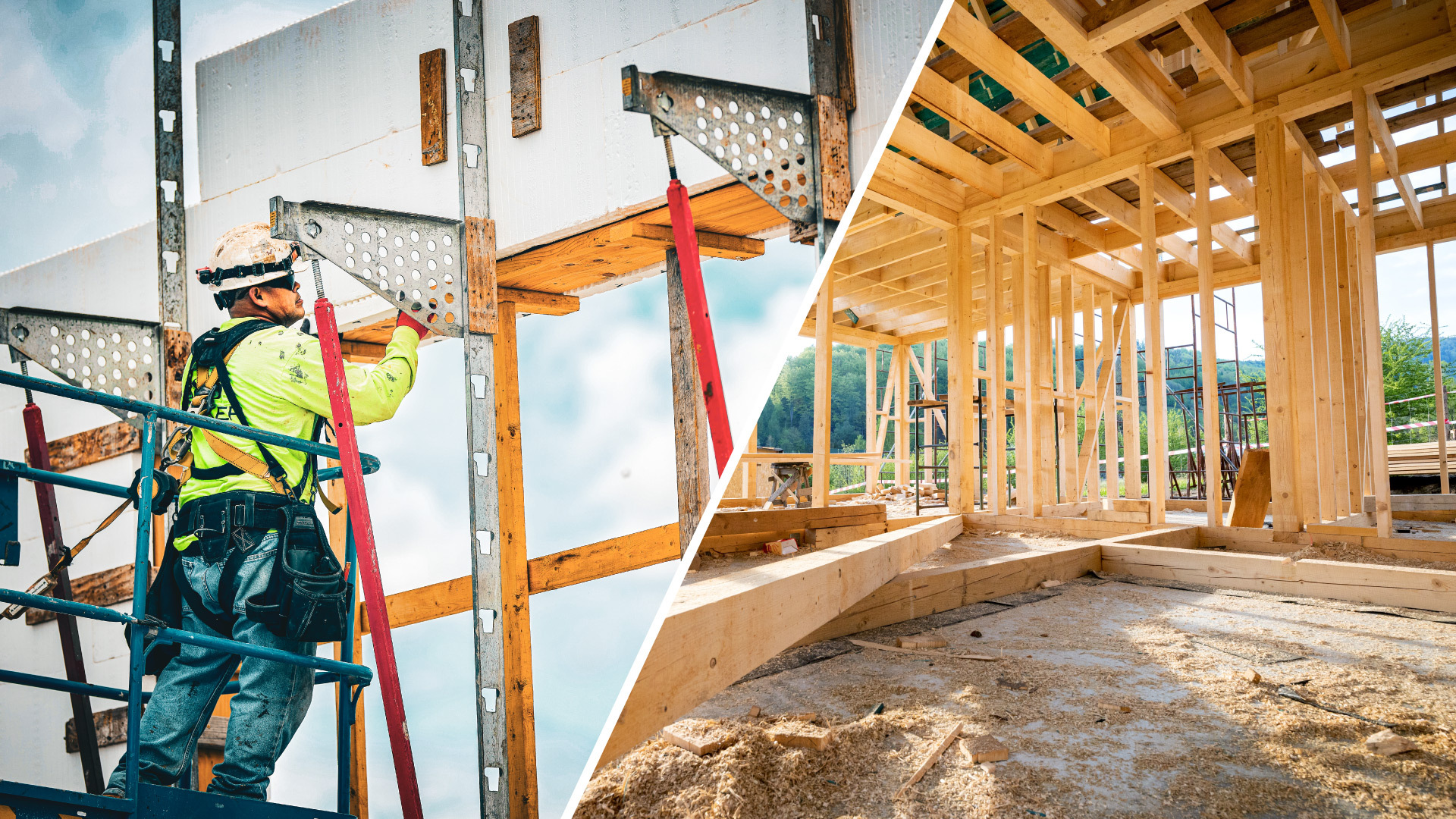
Builders, contractors, and architects often consider ICF and wood frame construction. The choice becomes clear when you look at the facts.
Wind and Hurricane Resistance
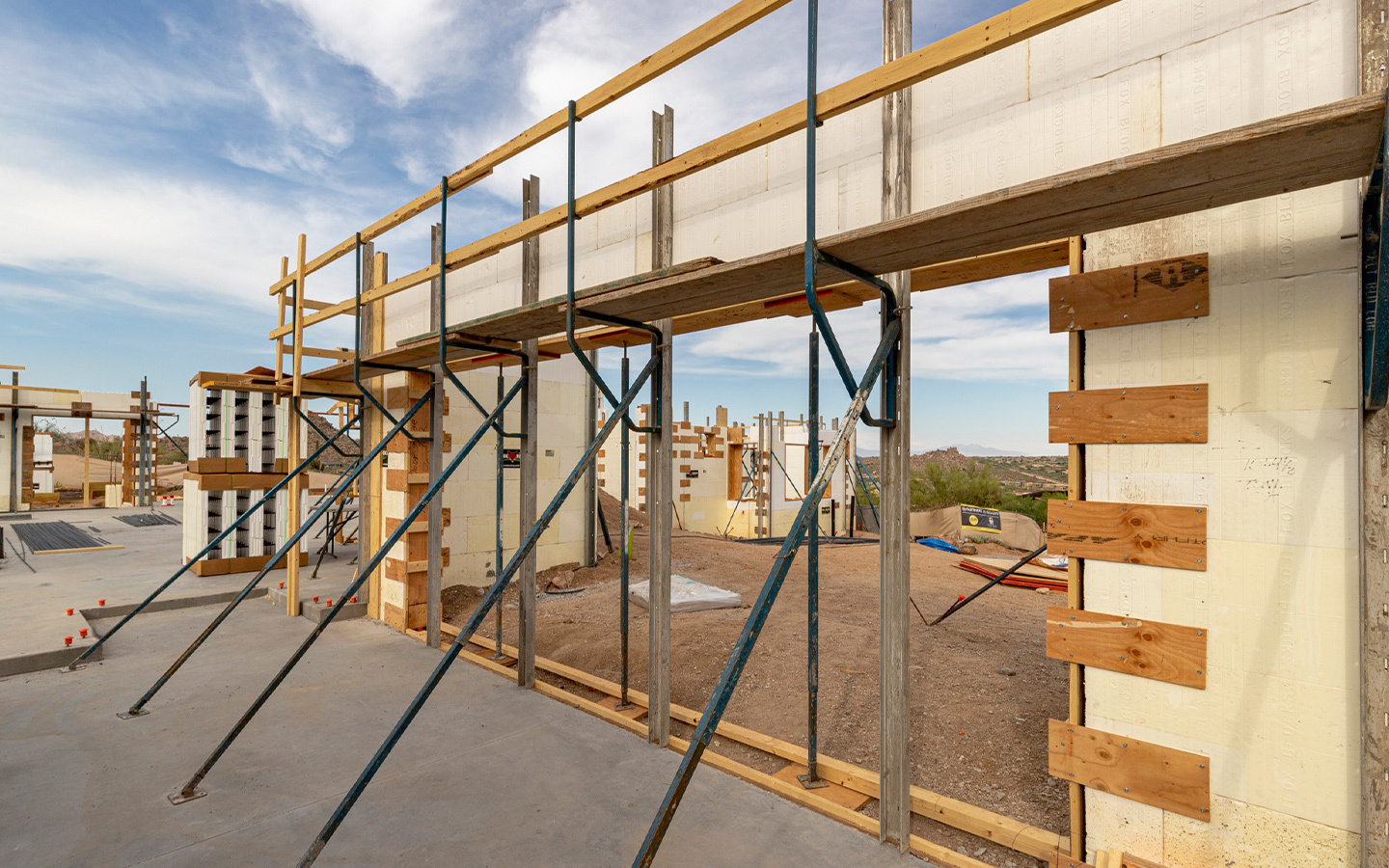
ICF construction uses a reinforced concrete core. This core resists wind-induced racking, out-of-plane loading, and wind-borne debris impact far better than light-frame wood construction. Fox Blocks ICF walls are tested to ICC 500 missile-impact standards, simulating debris carried at hurricane-force velocities. They exceed FEMA-ATFP Federal Military and DoD standards for structural resilience. (We can link to the ICC 500 document here.)
Wood frame construction relies on shear panels, hold-downs, and connectors to transfer wind loads through the structure. Under sustained hurricane-force winds or direct tornado impact, this load path often fails, leading to progressive structural failure. That's why we see partial or total collapse after nearly every major wind event.
The ICF advantage: Monolithic concrete has no load path to interrupt. The wall is the structure.
Fire Resistance
ICF construction achieves fire resistance ratings of two to four hours, as tested by ASTM E119 and CAN/ULC S101. Concrete doesn't ignite, spread flame, or produce toxic combustion gases. In communities near wildfires, an ICF structure presents no combustible surface to an advancing fire front.
Wood frame construction is, by definition, combustible. In urban and wildland-urban interface fire events, wood frame structures don't just fail; they actively contribute to fire spread. Wood-frame buildings often fail rapidly and completely during wildfires.
The ICF advantage: A non-combustible structure. Four-hour rated assemblies. This gives critical time for egress, suppression, and survival.
Flood and Moisture Resistance
ICF construction creates a monolithic concrete wall with a PERM rating below 1.0; it's virtually impermeable to moisture. Concrete doesn't rot, swell, grow mold, or lose structural integrity when wet. Fox Blocks ICF walls are specified for below-grade applications precisely for this reason.
Wood frame construction absorbs moisture, swells, warps, and creates an ideal environment for mold growth when exposed to floodwater. Flood damage worsens with the ongoing degradation that follows: rot, mold remediation, and fastener corrosion all compromise the structure long after the water recedes.
The ICF advantage: Concrete resists. It doesn't absorb, rot, or progressively fail when exposed to water.
Thermal Performance and Energy Resilience
ICF construction delivers R-23.5+ whole-wall thermal performance. It uses continuous, double-layer EPS insulation, so there's no thermal bridging at the studs. Its concrete core's thermal mass absorbs heat, then slowly releases it. This moderates interior temperature swings, even during extreme weather. If the power goes out during a polar vortex or a heat wave, an ICF building holds its interior temperature far longer than a wood-frame structure.
Wood frame construction typically achieves R-13 to R-21 in the cavity, but stud bridging compromises effective thermal performance, often reducing the overall wall R-value by 20 to 30 percent. You won't find any thermal mass benefits here. When temperatures get extreme, wood-frame buildings quickly lose their interior conditioning.
The ICF Advantage: With ICF, you get continuous insulation, thermal mass, and up to a 50 percent reduction in heating and cooling costs over the building's lifetime.
At a Glance
Category | Fox Blocks ICF | Wood Frame |
Wind Resistance | 200 mph+ engineered. FEMA-ATFP certified. | Progressive failure under hurricane force. |
Fire Resistance | 4-hour rated. Non-combustible. | Combustible. Primary fuel in wildfire events. |
Flood Resistance | Monolithic. PERM below 1.0. Will not rot. | Absorbs water. Rots, molds, degrades. |
Thermal Insulation | R-23.5+ continuous. No thermal bridging. | R-13 to R-21 with significant stud bridging loss. |
Air Barrier | Monolithic. Exceeds code by default. | Requires additional wrap, seal, and membrane. |
Vapor Barrier | Integrated. No added membrane needed. | Separate installation required. |
Sound Attenuation | STC 50 to 55+. | STC 33 to 45 without added treatment. |
Long-Term Durability | Does not rot, warp, or degrade. | Degrades in wet and extreme climates. |
Energy Code Readiness | Net Zero capable by design. | May require upgrades for future codes. |
Lifecycle Cost | Up to 50% lower energy costs. | Standard baseline. Higher costs in extreme climates. |
Commercial Disaster Resilience: Building Community Safety
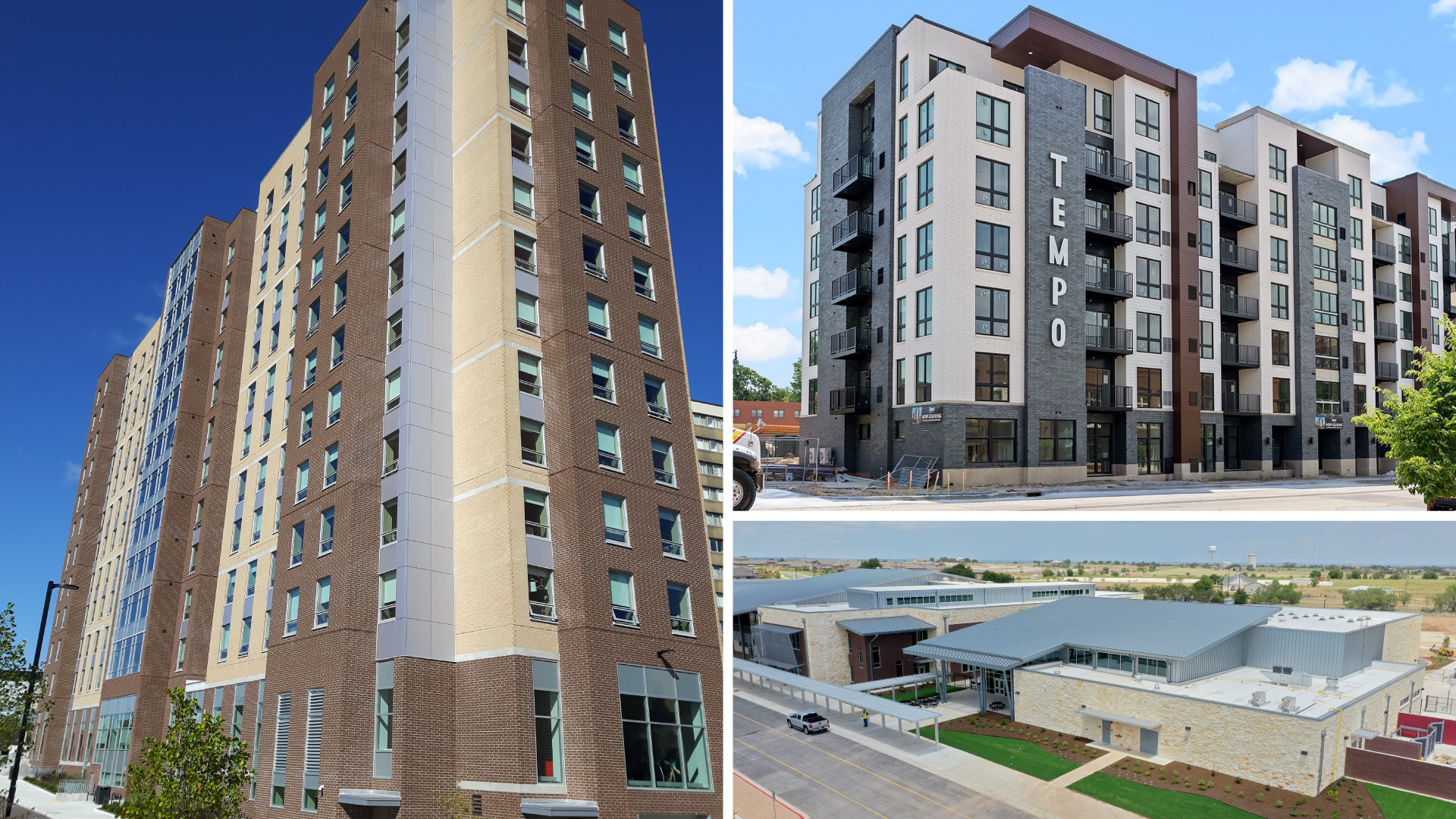
Residential disaster resilience protects families. Commercial disaster resilience protects entire communities. These are the buildings that matter most when it matters most. The schools that become evacuation centers, the fire stations that coordinate response, the hospitals that keep operating, the community centers where people shelter until it passes.
Wood frame construction was never designed for this role. Insulated Concrete Form construction was.
Buildings That Define Community Resilience
Schools and Educational Facilities
Fox Blocks ICF schools serve dual purposes: educating students daily and functioning as FEMA emergency shelters during disasters. These structures withstand direct wind loading, resist the spread of fire, maintain climate control during outages, and provide acoustic isolation without retrofits or added costs.
Fire Stations and Emergency Services
Fire stations must remain operational during evacuations. Fox Blocks ICF stations meet FEMA-ATFP blast resistance standards, provide four-hour fire ratings, and use thermal mass to regulate interior temperatures when generators fail.
Healthcare and Medical Facilities
Hospitals and clinics cannot close during disasters. ICF construction ensures structural integrity under wind loads, fire resistance, and thermal performance, preventing collapse and reducing HVAC strain at surge capacity. Walls deliver STC 50+ sound attenuation for patient privacy.
Community Centers and Municipal Buildings
ICF-constructed community centers remain habitable long after initial events. Concrete resists moisture intrusion, prevents mold growth, and eliminates rot. Keeping facilities operational through recovery operations when wood-frame buildings fail.
Built Different. Built to Last.
Wildfires are burning in places that have never burned before. Floods are reaching streets that have never flooded before. Tornado Alley grows bigger each year, and Hurricanes reach new categories each season.
When you build with Fox Blocks Insulated Concrete Forms, you are not just choosing a wall system. You are telling your clients and your community that you built it to withstand the disaster.
Let's change the way we build. One block at a time.
Ready to get started? Fill out our contact form below or browse our website for more resources.
Frequently Asked Questions About ICF Disaster Resilience
Are Insulated Concrete Form buildings stronger than wood frame buildings? Yes. ICF buildings use a reinforced-concrete structural core that significantly outperforms wood-frame construction in wind, fire, and flood resistance, as well as long-term durability. Fox Blocks ICF walls meet and exceed FEMA-ATFP Federal Military and DoD standards for structural resilience, a benchmark that wood frame construction is not designed to meet.
How do ICF walls perform in a hurricane? Fox Blocks ICF walls are engineered for wind loads exceeding 200 mph and tested to ICC 500 missile-impact standards. The monolithic concrete core resists wind-induced racking and out-of-plane loading without the load-path discontinuities that can cause progressive structural failure in wood-frame construction during hurricanes.
Are ICF homes fireproof? ICF homes are not fireproof, but Fox Blocks ICF wall assemblies achieve fire resistance ratings of 2 to 4 hours per ASTM E119 testing. Significantly outperforming wood-frame construction. Concrete does not ignite, does not spread flame, and does not produce toxic combustion gases. In wildfire-prone regions, ICF construction presents no combustible surface to an advancing fire front.
Can ICF construction withstand flooding? Yes. Fox Blocks ICF walls produce a monolithic concrete structure with a PERM rating below 1.0, making them virtually impermeable to moisture intrusion. Concrete does not rot, mold, or lose structural integrity when exposed to water. Making ICF an ideal choice for flood-prone regions and below-grade applications.
Is ICF construction more expensive than wood frame? ICF construction typically carries a modest premium over wood frame at the time of construction, generally estimated at 2 to 5 percent of total project cost, depending on scope and market. This premium is typically recovered through reduced energy costs, lower insurance premiums in high-hazard zones, reduced maintenance costs, and the elimination of separate insulation, air barrier, and vapor barrier installations. Over the life of the building, ICF construction is widely regarded as the lower-cost option.
What is the R-value of Fox Blocks ICF walls? Fox Blocks ICF walls deliver a whole-wall R-value of R-23.5 or higher, achieved through continuous double-layer EPS insulation with no thermal bridging through studs. This compares favorably to typical wood-frame wall assemblies, which achieve R-13 to R-21 in the cavity but lose 20 to 30 percent of their effective thermal performance due to stud bridging.
Do ICF walls meet current building codes? Yes. Fox Blocks ICF walls meet and exceed current International Energy Conservation Code (IECC) requirements, National Building Code of Canada (NBCC) standards, and applicable local building codes across North America. Fox Blocks maintains code compliance documentation, including CCRR-1010, city-specific approvals for Los Angeles and New York, and Florida Product Approval for high-velocity hurricane zones.
How long do ICF buildings last? Concrete structures routinely last 100 years or more with minimal structural maintenance. Unlike wood-framed buildings, ICF buildings are not subject to rot, pest damage, or the structural degradation that occurs in wet or extreme climates. The longevity of ICF construction is one of its most significant lifecycle cost advantages.