
12 Modern Home Construction Methods
Housing construction has entered a period of structural change as residential projects face tighter energy codes, rising performance expectations, and greater pressure to deliver long-term durability. Builders are no longer evaluating materials in isolation but are instead comparing construction methods based on how well they integrate structure, enclosure, services, and workflow. The result is a growing shift toward system-based approaches that improve predictability and overall build quality.
How Builders Evaluate Modern Housing Construction Methods
Before selecting a construction approach, builders weigh how each method performs across multiple project demands. Schedule still matters, but it is no longer the sole driver. Energy performance, durability, labor coordination, and long-term operating risk increasingly shape decision-making in housing construction.
Modern residential projects reward methods that reduce fragmentation. Systems that combine structural capacity with insulation, air control, and attachment simplify sequencing and limit trade overlap. Builders also consider how methods support sustainability goals, whether through material efficiency, reduced rework, or long service life that lowers lifecycle energy use. These criteria form the lens through which today’s construction methods are evaluated.
1. Traditional Stick-Built Construction
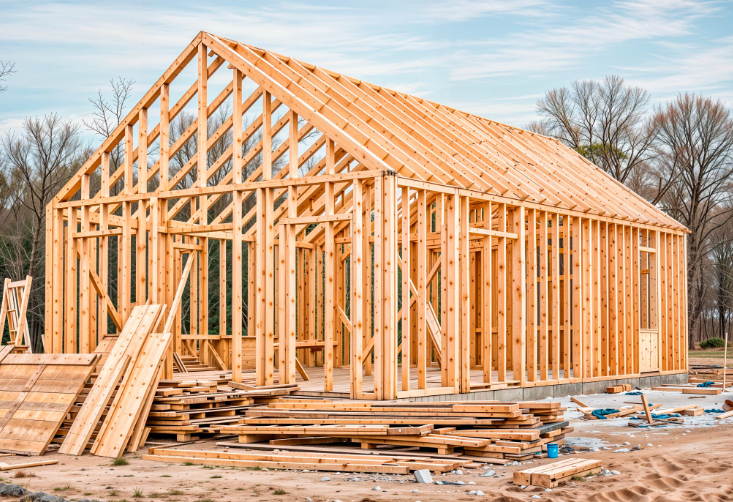
Traditional stick-built construction remains the most common residential building method, relying on wood framing assembled entirely on site. Its flexibility and familiarity make it accessible across a wide range of projects, particularly where labor availability, local codes, and material supply favor conventional practices.
From a method-selection perspective, stick-built construction often serves as the baseline against which newer approaches are evaluated. While adaptable, it requires coordination across multiple trades and relies heavily on field-installed layers to achieve enclosure performance, which is why alternative construction methods have emerged to reduce fragmentation and improve long-term consistency.
2. PEX Plumbing Systems
PEX plumbing has become a standard choice in modern housing construction due to its flexibility and simplified installation. Long, continuous pipe runs reduce the number of fittings required, limiting potential leak points and accommodating complex floor plans more easily.
PEX systems also support centralized manifold designs that improve pressure balance and simplify future maintenance. In residential projects, these characteristics streamline rough-in phases and reduce coordination conflicts with framing and insulation, contributing to cleaner assemblies and easier long-term service access.
3. Insulated Concrete Form (ICF) Construction
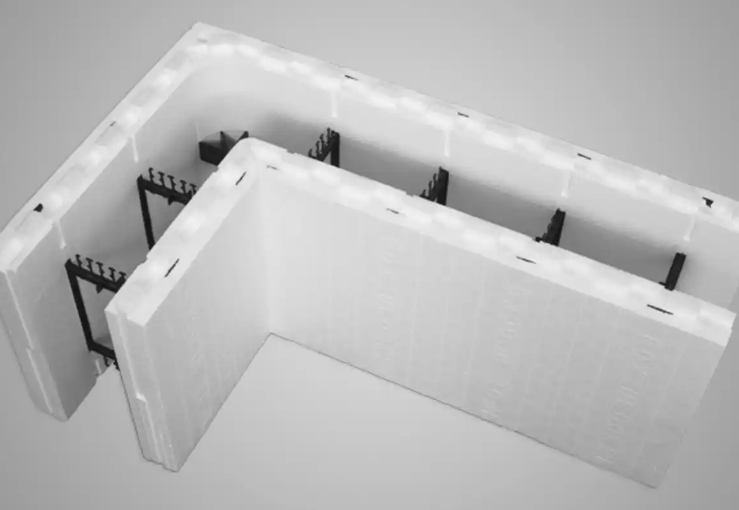
Insulated Concrete Form construction is often selected when builders want a wall system that performs as a single, integrated assembly rather than a stack of separate layers.
How ICF Walls Are Built
Insulated Concrete Form construction represents a system-based approach that combines structure and enclosure into one wall assembly. Crews stack interlocking foam forms, place reinforcing steel, and then fill the cavity with concrete. After the concrete cures, the wall delivers structural capacity, continuous insulation, and air control within a coordinated system.
Why ICFs Are Selected For Enclosure Performance
From a method-selection standpoint, ICF construction is commonly chosen for projects where enclosure performance and long-term durability drive the decision. Continuous insulation reduces thermal bridging, while the concrete core adds mass that stabilizes interior temperatures under changing outdoor conditions. The assembly’s wind, fire, and impact resistance come from the monolithic reinforced concrete core rather than from secondary layers applied later.
How ICF Construction Simplifies Trade Coordination
ICF construction also changes how a project is sequenced and coordinated. By consolidating multiple enclosure functions into one installed wall system, it reduces trade handoffs required to achieve a complete exterior shell. Mechanical, electrical, and plumbing runs can be planned around a predictable wall assembly, which helps limit penetration conflicts and supports consistent performance over the life of the home. Within housing construction, ICFs function as a reference method for integrated residential systems that prioritize performance through design rather than patchwork corrections.
4. Wireless and Low-Voltage Electrical Systems
Wireless controls, smart switches, and low-voltage technologies are changing how electrical systems are installed in homes. Reduced wiring requirements allow layouts to adapt over time without invasive modifications to finished walls and ceilings.
Within housing construction, fewer penetrations through wall assemblies help preserve air barrier continuity. When coordinated with high-performance enclosure systems, wireless electrical strategies support both efficiency and adaptability as homeowner needs change.
5. Modular Construction
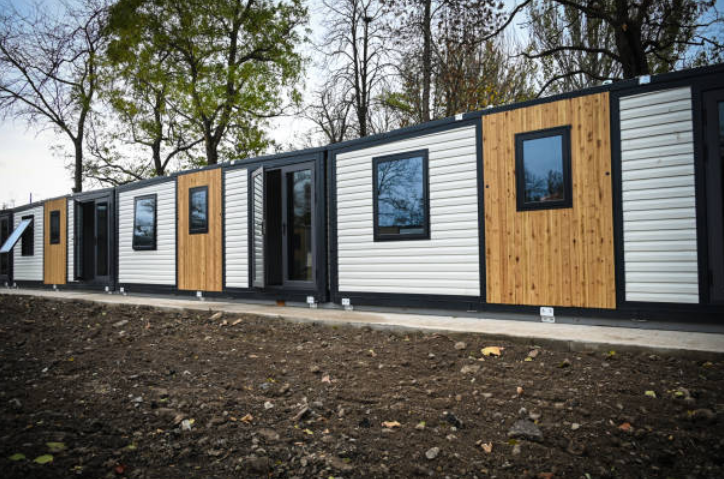
Modular construction fabricates large portions of a home off-site in controlled factory conditions while site work proceeds in parallel. Completed modules are transported to the jobsite and set in place, reducing exposure to weather delays and improving consistency across repeated layouts.
As a construction method, modular building offers schedule predictability and quality control advantages. It also introduces design considerations related to transportation limits, structural connections, and mechanical integration. Projects that succeed with modular construction address these constraints early, ensuring that modules connect cleanly and perform as a cohesive structure once assembled.
6. Last-Mile Material Delivery Strategies
Last-mile delivery services allow builders to schedule materials to arrive as needed rather than stockpiling them on site. This approach improves jobsite organization, reduces material damage, and limits downtime caused by handling and relocation.
On constrained residential sites, coordinated delivery can significantly improve workflow efficiency. Crews are able to focus on installation rather than logistics, supporting steadier progress across trades.
7. 3D Printing in Residential Construction
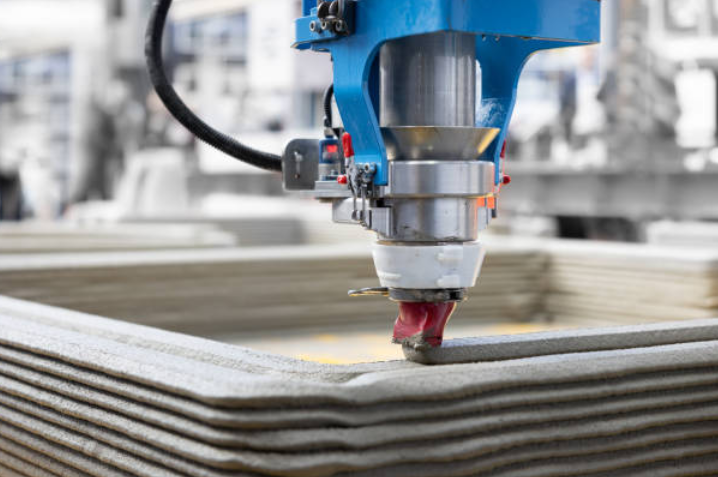
Three-dimensional printing is an emerging method that uses computer-controlled equipment to place material in layers and form structural components directly from digital models. Early residential applications have demonstrated compressed build timelines for small structures, particularly in areas where labor availability is limited.
At present, 3D-printed housing functions best as a hybrid approach. Conventional trades are still required for roofing, mechanical systems, electrical infrastructure, and finishes, and code acceptance varies by jurisdiction. Even so, the method highlights how automation may influence specific segments of housing construction as material systems and standards continue to evolve.
8. Panelized Wall Systems
Panelized wall systems fabricate wall sections off-site and assemble them on location. Unlike modular construction, panelization preserves architectural flexibility while improving quality control and shortening framing timelines.
Panels may include framing, sheathing, insulation, and openings before delivery. This method reduces waste, improves dimensional accuracy, and limits labor variability during on-site assembly, making it a practical option for many residential projects.
9. Advanced Framing Techniques
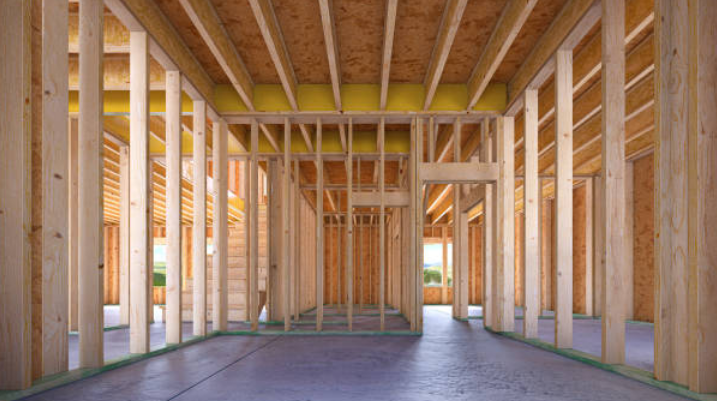
Advanced framing strategies optimize structural layouts to reduce material usage while increasing space for insulation. Techniques such as increased stud spacing and aligned framing members improve thermal performance without compromising structural integrity.
When combined with engineered lumber and precise layout practices, advanced framing supports efficient material use and predictable enclosure behavior. This approach is often paired with other high-performance construction methods to enhance overall efficiency.
10. High-Performance Building Enclosure Strategy
High-performance building enclosure strategy approaches the exterior shell as a unified system that manages heat, air, and moisture together rather than as a collection of independent upgrades.
How The Enclosure Works As A System
High-performance enclosure design treats the building envelope as a coordinated assembly in which continuous insulation, airtight construction, and controlled vapor management function together. When these control layers are aligned, they limit energy loss, reduce moisture risk, and stabilize interior conditions across changing climates and seasons.
How Passive House Formalizes Enclosure Targets
Rather than relying on incremental improvements, successful projects integrate enclosure performance into early design decisions that influence wall assemblies, openings, and structural transitions. This approach supports long-term durability, occupant comfort, and operating efficiency throughout the life of the home and has become a defining factor in modern housing construction.
Performance-focused standards such as Passive House certification formalize this strategy by setting rigorous targets for airtightness, insulation continuity, and thermal performance, reinforcing the value of enclosure systems that function as integrated assemblies rather than layered afterthoughts.
11. Prefabricated Mechanical Systems
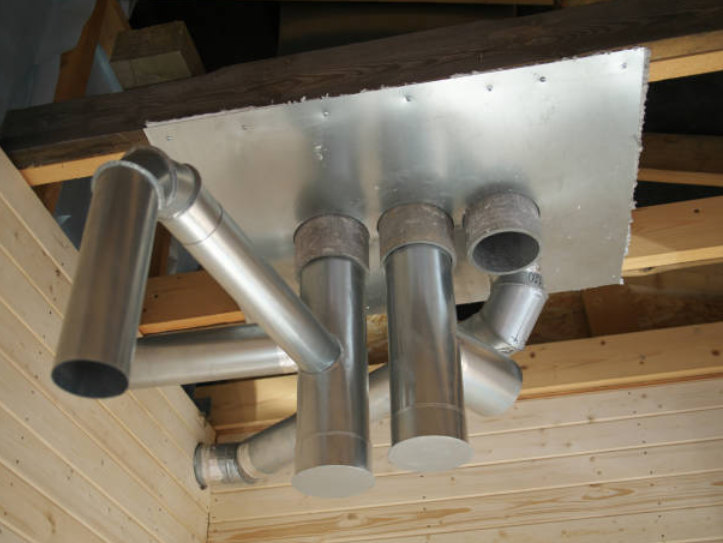
Prefabricated mechanical systems assemble components such as ductwork, piping, and equipment off-site before installation. This reduces on-site labor demands and limits conflicts between trades during construction.
In residential projects, prefabrication improves consistency and allows mechanical systems to be installed with greater precision. Organized service zones also support easier access for inspection, maintenance, and future upgrades.
12. Integrated Project Delivery and Early Coordination
Integrated planning aligns structure, enclosure, services, and logistics into a coordinated construction strategy. Rather than treating each phase independently, this method emphasizes sequencing decisions made early in design.
As housing construction continues to evolve, builders increasingly evaluate methods based on how well they support predictable performance across the life of the home. Integrated planning allows different construction approaches to work together rather than competing for space or priority.
Build High-Performance Homes with Fox Blocks ICF Systems
Fox Blocks manufactures Insulated Concrete Form systems designed for modern residential construction. Each wall assembly integrates structure, insulation, and air control into a single system that supports durability, energy efficiency, and resilient performance. Contact us today for more information.