
CMU Walls: Advantages, Disadvantages and A Better Option
For decades, builders have relied on concrete masonry units (CMUs) for their sturdy, cost-effective construction projects. The advantages of CMU are well-documented, but like any other material, it comes with its share of disadvantages. In this article, we'll delve into the concrete masonry unit advantages and disadvantages, and then introduce an innovative alternative that might just change the way you think about construction: insulated concrete form (ICF) blocks.
What Are CMU Walls
A CMU wall is a structural wall built from concrete masonry units that are stacked and bonded together using mortar. These blocks are manufactured in standardized shapes and sizes so they can be assembled efficiently to form strong, durable wall systems for many types of buildings.
A typical CMU block wall is constructed by laying rows of concrete masonry units with mortar joints between them. Many CMU walls also contain steel reinforcement bars placed within the hollow cores of the blocks. These reinforced cores are often filled with grout to improve structural performance and increase resistance to wind, seismic forces, and other structural loads.
Understanding CMUs

Before we dive into the advantages and disadvantages of CMU, let's take a moment to understand what it is. What is CMU in construction? A CMU, also known as a concrete block or cinder block, is a type of building material used in the construction of walls. It's created from a blend of Portland cement and aggregates like sand, crushed stone, or other lightweight aggregate. The terminology can sometimes cause confusion, which is why many builders review the differences between cinder block vs concrete block when evaluating masonry materials.
The Portland cement blend is poured into molds in the shape of the CMU being produced. The molds are then vibrated and compacted to remove air pockets before the CMUs are removed from the mold. The CMU is then cured in an oven to lock the form in place. After curing, CMUs are shipped out to construction sites.
CMU Wall Components
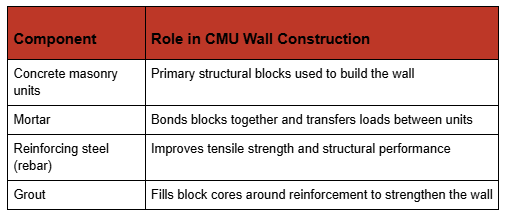
Many structural CMU walls include reinforcement and grout in selected block cells to increase load capacity and improve resistance to lateral forces.
Advantages of CMUs
There's a reason why CMUs have been the go-to building material for years. Concrete masonry unit walls have strength, versatility, and cost-effectiveness.
CMUs are durable and resistant to a wide range of environmental conditions, including fire and impact damage. Concrete has excellent strength in compression, which makes it a great construction material. Concrete is also naturally resistant to water damage and pests like termites.
Concrete masonry units can be used in a variety of construction projects, from residential homes to commercial buildings. CMUs also come in different shapes and sizes to expand the applications where they can be used.
Compared to other construction materials, CMUs tend to be less expensive, particularly for large projects. CMUs can be easily mass-produced and are typically easy to come by. Material shortages are unlikely when it comes to CMUs.
Common CMU Block Sizes and Wall Thickness
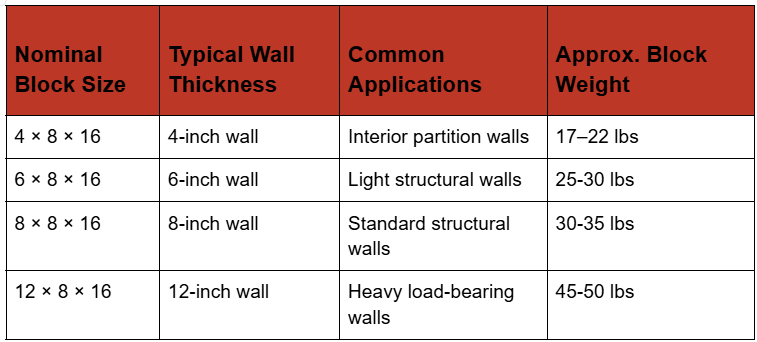
Most structural CMU construction uses 8-inch blocks, which provide a balance between structural capacity and installation efficiency.
Disadvantages of CMUs
While the advantages of concrete masonry units are significant, there are also drawbacks to consider. Some of the disadvantages of concrete masonry units include weight, lack of insulation, and the skilled labor required for construction.
CMUs are heavy, which can complicate construction and transportation. The blocks themselves often require machines to transport around a job site and can quickly wear out workers who are building with them. The larger the CMU being used, the more difficult it is on the laborers working with it. In some applications a CMU wall will require vertical reinforcement bars installed and the cavities are filled solid with grout.
CMUs can provide minimal insulation, but they don't perform as well as some other materials. For energy-efficient construction, CMU buildings will require further insulation to keep the building comfortable and energy bills low.
Because of their weight and the need for precision, building with CMUs can be time-consuming. The heavy blocks must be properly installed or the building may have structural flaws. Moving large concrete blocks also requires care to make sure the install is done properly and accidents do not occur.
Applications of CMU Walls
CMU walls are used in a wide range of construction projects because they offer durability and structural strength. Their resistance to fire, pests, and environmental exposure makes them a reliable material for buildings that must withstand demanding conditions.
In residential construction, CMU walls are commonly used for basement walls, foundations, and retaining walls. These structures benefit from the compressive strength of concrete masonry units, which helps support loads from the building while resisting soil pressure.
Commercial and institutional buildings frequently use CMU walls for schools, warehouses, retail facilities, and mechanical enclosures. The modular design of CMU blocks allows large wall assemblies to be constructed efficiently while maintaining consistent structural performance.
CMU walls may also be used as exterior structural walls or interior partition walls, depending on the building design and structural requirements.
A Superior Alternative: Insulated Concrete Form (ICF) Blocks

Now that we've explored the advantages and disadvantages of CMU, let's turn our attention to a more advanced building material: ICF blocks. Builders comparing traditional masonry systems often evaluate ICF vs CMU wall construction to understand the differences in insulation performance, construction speed, and long-term durability.
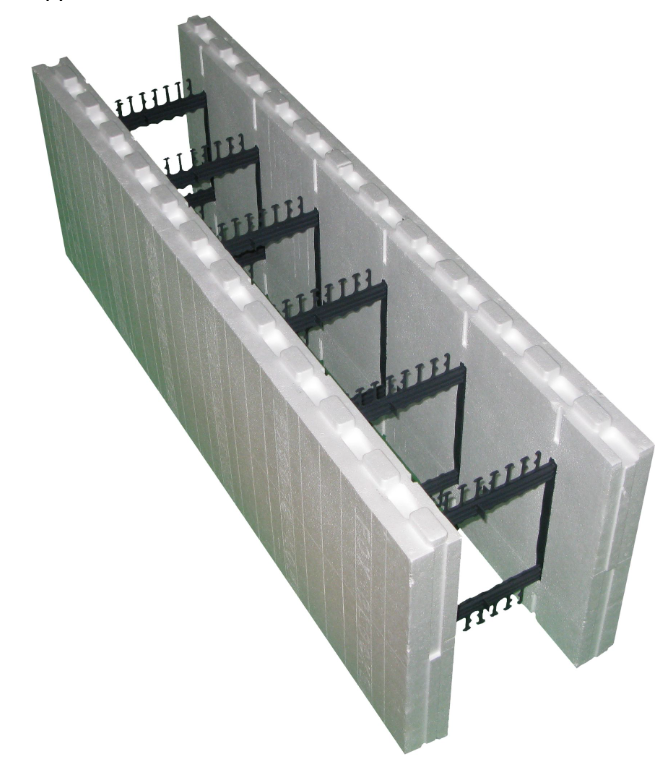
ICF blocks are an innovative building material made from reinforced concrete sandwiched between two layers of EPS foam insulation. Their design provides superior insulation, strength, and ease of construction.
ICF blocks are generally a better option due to their:
Energy efficiency
Structural superiority
Ease of construction
Schedule reductions
Crew size reductions
GC term insurance and general condition advantages
Increased resilience capabilities
Acoustic performance
Efficient wall coverage, with one standard block covering approximately 5.33 sq. ft. of wall area
Lightweight design, with a standard 6-inch block typically weighing around 7.5 lbs
Building with ICF blocks naturally results in a structure with both interior and exterior layers of continuous insulation. Coupled with the increased thermal mass from the concrete core of the wall, ICFs have superior insulation and airtightness properties that keep buildings warm in the winter and cool in the summer to significantly reduce energy costs.
ICF blocks are lightweight and easy to work with, which makes construction quicker and less labor-intensive than with traditional CMUs. Instead of moving heavy concrete blocks around a job site, workers stack foam blocks as needed and the concrete is poured in place. In addition to being easier on workers, ICF blocks are less prone to error during installation and require less skilled labor often reducing manpower needs by over 50%.
ICF blocks are resistant to fire, wind, and seismic activity, so they are an excellent choice for building in any climate or geographical location. ICF blocks are commonly specified for structures requiring blast resistance and FEMA-rated tornado shelters. ICFs are low maintenance and durable. ICFs also provide excellent sound insulation.
Why ICFs Are a Superior Material
When considering the advantages and disadvantages of concrete masonry units (CMUs), it's clear that while they have their place in construction, there's a new player in town that provides even more benefits. Recent studies show ICFs offer a lower completed wall assembly cost than CMU walls with the multiple layers needed for insulation, weather barrier, and furring for finishes. Builders comparing lifecycle costs often evaluate whether ICF is less expensive than traditional masonry wall systems.
Insulated concrete form blocks provide a host of advantages over traditional CMUs, including better energy efficiency, easier construction, and improved resilience. Whether you're building a new home or a commercial building, ICFs are a smart choice.
Work with the Best in ICFs with Fox Blocks
If you're interested in learning more about how ICFs can benefit your construction project, Fox Blocks would love to help. Fox Blocks specializes in providing high-quality ICF blocks for a wide range of construction needs. Fox Blocks provides free training with a comprehensive online course, on the Integrated Learning Center. Contact the experts at Fox Blocks today to learn more about their products and how they can improve your next building project.
Frequently Asked Questions About CMU Walls
What are CMU walls?
CMU walls are walls constructed from concrete masonry units stacked together with mortar. The hollow cores of the blocks may contain steel reinforcement and grout to improve structural strength. CMU walls are commonly used for foundations, structural exterior walls, and commercial construction.
What does a concrete masonry unit contain?
A concrete masonry unit contains Portland cement, aggregates such as sand or crushed stone, and water. These materials are mixed together, molded into block shapes, compacted, and cured to create durable masonry units.
How to insulate CMU walls
CMU walls are typically insulated using interior insulation systems, insulation placed within the block cavities, or exterior continuous insulation. Exterior insulation systems are often used to reduce thermal bridging and improve overall building energy efficiency.
How thick are CMU walls?
CMU walls vary in thickness depending on the block used. Common CMU wall thicknesses range from 4 inches for interior partitions to 12 inches or more for structural walls, with 8-inch blocks being the most common for structural construction.
How to waterproof CMU walls
CMU walls are waterproofed using coatings, membranes, or drainage systems that prevent moisture penetration. Foundation walls commonly use exterior waterproofing membranes combined with drainage layers to control groundwater and prevent water intrusion.