
How to Build an Above Ground Tornado Shelter: Key Steps and Safety Requirements
Extreme wind pressures, rapid pressure differentials, and high-velocity debris define the hazard environment confronting any above ground tornado shelter. Performance depends on engineering rigor rather than enclosure thickness or visual mass alone.
Structural Demands Of Tornado Protection
Tornadoes impose loads that exceed conventional residential design thresholds. Wind pressure, uplift forces, and debris impact occur simultaneously, stressing walls, roof assemblies, and structural connections.
Wind Pressure And Debris Impact Forces
Wind speeds associated with severe tornadoes generate lateral pressures capable of bending or overturning poorly designed structures. At the same time, windborne debris introduces concentrated projectile energy capable of breaching conventional wall assemblies. Load magnitude varies with wind velocity, enclosure geometry, and internal pressurization effects.
An above ground tornado shelter must resist both pressure loading and missile impact without compromising structural integrity. Structural failure often initiates where reinforcement continuity, openings, or connection detailing are insufficient, allowing localized damage to propagate into progressive enclosure breach.
Site Selection And Shelter Placement
Location influences occupant safety, structural reliability, and exposure severity. Placement decisions determine travel distance, debris risk, and anchoring requirements.
Interior-Adjacent Installations
Shelters positioned within the primary structure reduce occupant travel distance during rapidly developing storms. Accessibility becomes critical when warning times are limited. Slab-on-grade installations require verification of slab thickness, reinforcement layout, and subgrade stability to resist anchorage forces. Whole-structure resilience strategies observed in tornado safe homes illustrate how reinforced concrete envelopes alter debris impact exposure and load distribution.
Exterior Standalone Shelters
Exterior placement increases direct exposure to debris concentration, uplift pressures, and moisture intrusion. Drainage design becomes essential to prevent water accumulation at the shelter base. Soil behavior, frost-depth considerations, and erosion potential influence foundation design and long-term stability.
Structural Design Fundamentals
Shelter performance depends on resistance to pressure, impact, uplift, and sliding. Structural continuity governs how loads are distributed across the enclosure.
Load Path Continuity And Assembly Strength
A tornado-resistant enclosure must maintain uninterrupted force transfer from roof diaphragm to walls, then into anchorage and foundation. Discontinuities introduce stress concentrations that elevate failure risk, particularly where interrupted load paths force individual components or connections to absorb loads beyond their design capacity. Structural design therefore prioritizes load-path continuity over isolated component strength.
Reinforced concrete assemblies provide the mass and rigidity required to resist extreme tornado pressures while limiting deformation under impact loading. Applications such as ICF tornado safe rooms demonstrate how continuous reinforced concrete cores improve debris impact resistance and structural stability during severe wind events. Steel and composite systems may meet criteria when properly engineered, though thin-gauge materials remain sensitive to connection detailing, local buckling behavior, and concentrated debris impact energy that can trigger sudden localized failure.
Anchoring And Foundation Integration
Anchorage transfers extreme forces into the supporting structure. Uplift, sliding, and overturning loads must be resisted concurrently.
Anchorage Design Considerations
Anchor spacing, embedment depth, edge distance, and load rating determine connection capacity. Cast-in-place anchors and embedded plates provide predictable performance when installed according to engineered specifications. Anchorage design must reflect calculated loads rather than generalized assumptions, as undersized or improperly installed anchors can permit uplift-induced separation or sliding displacement under extreme wind forces.
Slab And Subgrade Verification
Slab-on-grade installations require evaluation of concrete thickness, reinforcement layout, and soil compaction. Anchoring into undersized slabs introduces progressive failure risk under tension loading, where cracking or cone failure can reduce connection capacity. Subgrade movement caused by expansive soils or moisture variation can gradually compromise anchorage integrity, increasing the likelihood of displacement during extreme loading events.
Ventilation And Life-Safety Considerations
Habitability during shelter use depends on controlled airflow and pressure management. Vent openings must resist debris penetration without sacrificing structural integrity.
Ventilation Protection And Pressure Behavior
Engineered vent assemblies incorporate reinforced framing, internal baffles, and impact-rated covers designed to resist windborne debris. Improperly protected openings become projectile entry points capable of compromising enclosure integrity, allowing debris penetration or internal pressurization effects that intensify structural demand. Vent location, free area, and detailing must align with tested debris-resistance criteria while ventilation design balances occupant airflow and pressure resistance.
Rapid pressure fluctuations can impose localized stresses on vent components and adjacent wall sections when assemblies lack adequate reinforcement or anchorage. Structural integration ensures vent openings maintain airflow functionality without introducing a structural weakness or breach pathway.
FEMA And ICC 500 Compliance
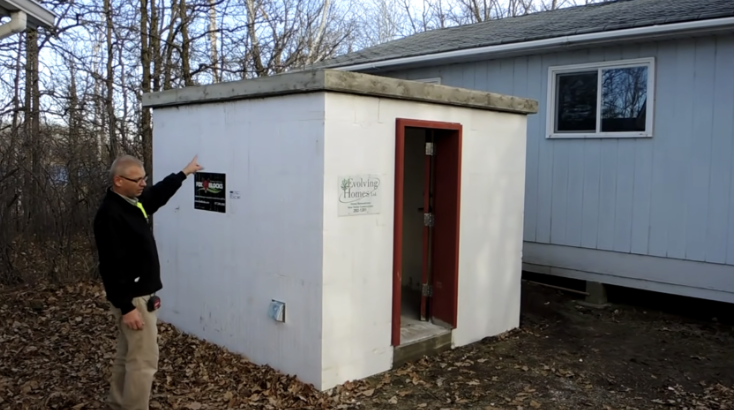
Safety validation for tornado shelters relies on performance criteria defined by FEMA guidance and ICC 500 standards. The framework governingFEMA-approved storm shelters establishes debris impact resistance, extreme wind pressure thresholds, and structural testing protocols used to evaluate life-safety enclosures. Compliance links shelter credibility to demonstrated structural behavior under simulated hazard conditions.
Debris Impact And Missile Testing
ICC 500 testing protocols require assemblies to withstand high-velocity projectile impacts without penetration or catastrophic failure. Door systems, hardware, penetrations, and vent assemblies must demonstrate equivalent resistance under controlled missile-impact scenarios representative of tornado debris hazards.
Wind Load Resistance Criteria
Shelters must resist extreme positive and negative pressures generated by tornadic wind fields. Engineering verification evaluates uplift forces, lateral pressures, load reversals, and connection stability to ensure enclosure components maintain structural integrity.
Material Selection And Durability
Material selection influences structural resistance, environmental durability, and long-term maintenance demands. Reinforced concrete assemblies provide inherent mass, rigidity, and impact resistance while maintaining dimensional stability under moisture and thermal cycling. Moisture tolerance and corrosion resistance support durability in slab-on-grade and partially below-grade installations. Alternative systems may satisfy design loads yet introduce additional detailing requirements tied to corrosion protection, joint stability, or protective coatings.
Limitations Of Lightweight Assemblies
Wood framing lacks the density required for debris impact resistance. Thin steel systems depend heavily on stiffeners, weld integrity, and corrosion protection strategies. Composite performance varies with thickness, reinforcement configuration, connection detailing, and anchoring design.
Door Systems And Opening Protection
Door assemblies represent one of the most common shelter vulnerabilities. Impact resistance must match surrounding walls.
Door Assembly Performance And Failure Risk
Shelter doors incorporate reinforced cores, heavy-duty hinges, and multi-point latching hardware designed to resist both pressure loading and debris impact. Frame anchorage, hinge reinforcement, and installation tolerances directly influence performance during extreme wind events. Even small deviations in alignment or fastening can reduce resistance capacity under combined uplift and missile-impact forces, particularly at hardware interfaces where stresses concentrate.
Door breaches frequently result from hinge deformation, latch failure, or frame distortion rather than panel collapse alone. Once hardware or frame anchorage fails, progressive opening enlargement can occur under continued pressure cycling. Certification must therefore align with FEMA and ICC 500 debris-impact criteria instead of conventional exterior door ratings that do not simulate tornado missile hazards.
Cost Variables And Budget Realities
Project budgeting extends beyond enclosure cost. Structural requirements, engineering, and installation complexity define total investment.
Construction Cost Drivers
Excavation, slab upgrades, reinforcement, anchorage hardware, and certified door assemblies shape cost distribution. Discussions surrounding above ground tornado shelter cost often overlook foundation preparation and engineering fees.
Lifecycle Cost Considerations
Moisture control, corrosion resistance, and hardware durability influence long-term maintenance exposure. Initial savings achieved through under-designed assemblies frequently reappear later as repair or retrofit expense.
Common Construction Mistakes To Avoid
Predictable errors frequently undermine shelter performance:
Undersized anchorage systems can permit uplift-induced separation, allowing the shelter to shift or overturn under extreme pressure loading.
Inadequate slab reinforcement can enable cracking and anchorage cone failure under tension forces.
Non-rated door assemblies may deform or breach under missile-impact loading.
Improper reinforcement placement disrupts load paths and reduces pressure resistance.Unprotected vent openings introduce debris penetration and pressurization risks.
Drainage neglect can compromise foundation stability and long-term durability.
These deficiencies contribute to documented above ground tornado shelter failure scenarios. Failures often trace back to detailing deviations or absent engineering oversight during ICF safe room construction.
Engineering Oversight And Structural Verification
Life-safety structures demand professional engineering evaluation grounded in hazard-specific design criteria. Structural analysis defines wind load combinations, debris impact resistance, reinforcement schedules, anchorage forces, and connection detailing required for code-compliant performance. Engineering documentation establishes measurable resistance targets rather than relying on prescriptive assumptions.
Licensed professionals interpret ICC 500 requirements, verify load paths, and evaluate how material behavior, geometry, and site conditions interact under extreme events. An above ground tornado shelter constructed without engineering verification lacks validated confirmation that assemblies, openings, and anchorage systems meet required performance thresholds.
ICF Construction Advantages In Tornado Shelter Design
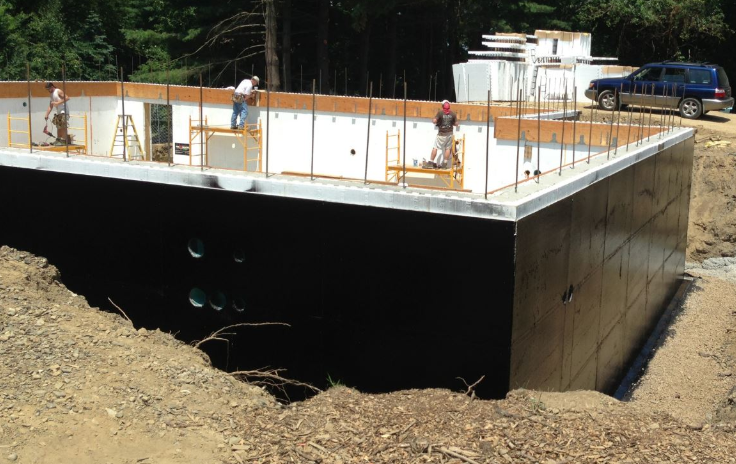
Insulated Concrete Form assemblies align naturally with tornado shelter performance requirements.
Continuous Reinforced Concrete Core
ICF systems produce a monolithic reinforced concrete structure capable of resisting extreme lateral pressures and debris impacts. The continuous concrete core reduces reliance on layered framing interfaces that can introduce localized weaknesses under impact or pressure loading.
Impact Resistance And Durability
Concrete mass dissipates projectile energy while embedded reinforcement controls tensile stresses generated by wind pressure and debris impact forces. Durability under moisture exposure supports long-term performance in slab-integrated and below-grade applications. Applications such as ICF tornado safe rooms demonstrate how reinforced concrete cores integrate tornado-resistant protection within residential structures.
Decisions That Define Shelter Performance
Shelter performance depends on how design loads, material selection, connection detailing, and construction precision interact under extreme conditions. Detailing choices govern force transfer across walls, roof assemblies, openings, and anchorage interfaces, where even minor deviations can alter enclosure behavior. Reinforcement placement, door assembly alignment, and ventilation protection directly influence whether the structure performs as intended. Reliability results from disciplined execution and coordinated design decisions rather than from any single component characteristic.
Build Stronger With Fox Blocks ICF Systems
Fox Blocks Insulated Concrete Forms provide the structural foundation required for high-performance safe room construction. Reinforced concrete cores deliver impact resistance, durability, and load-path continuity aligned with FEMA and ICC 500 design principles. Properly engineered ICF assemblies support resilient tornado shelter integration within residential structures. Contact us today for more information.